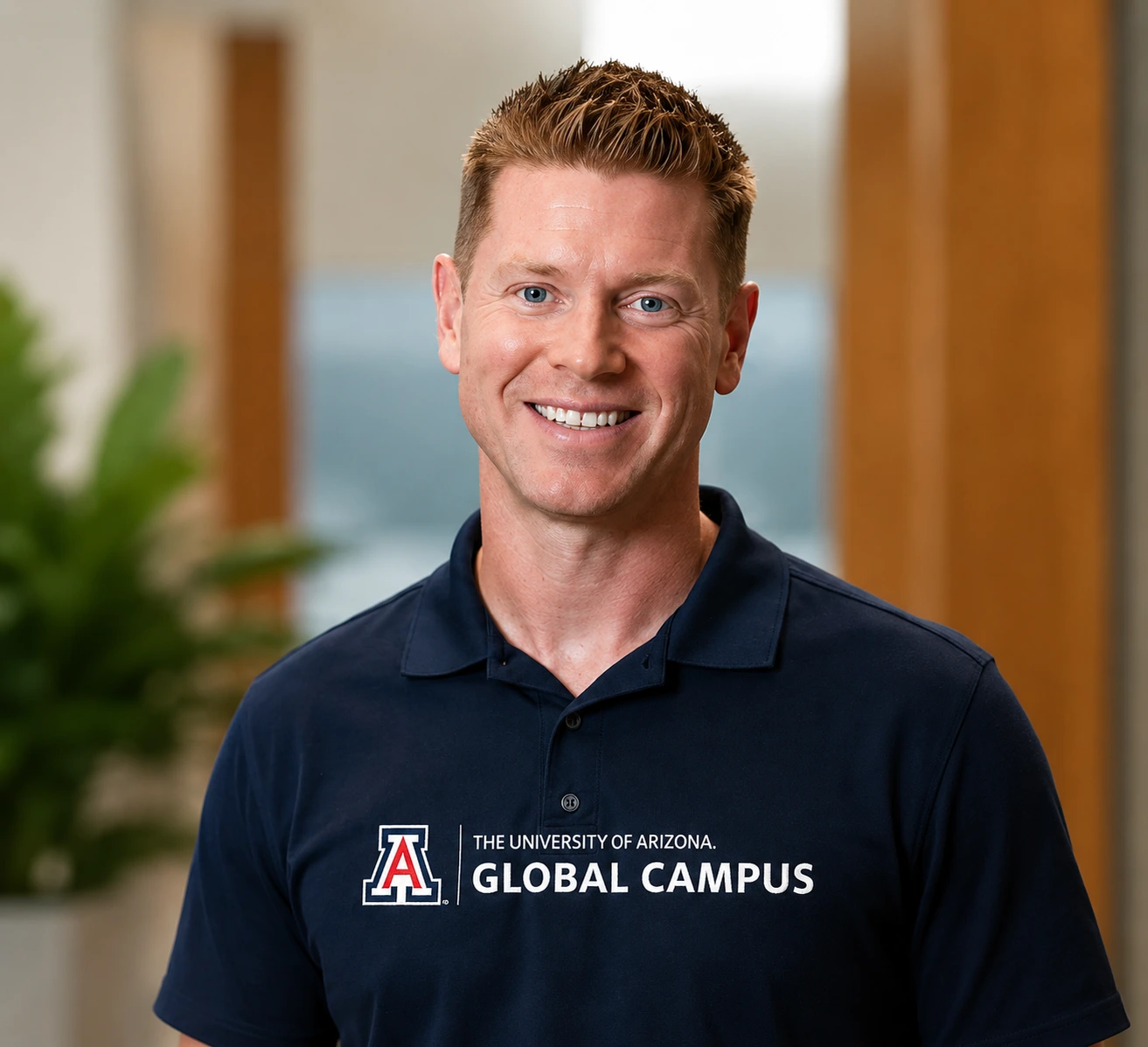
Momentum rarely starts with a single bold decision. More often, it builds quietly, one step at a time. In personal finance, that philosophy is known as the snowball method: focusing on manageable wins that compound into lasting progress. For Mike Cavaggioni, that mindset helped eliminate nearly $60,000 in debt and save enough to buy a home in Hawaii in just two years, reshaping how he approached money, education, and life.
A Navy veteran, real estate investor, entrepreneur, podcast host, husband, father, and graduate of the University of Arizona Global Campus (UAGC), Mike’s path has never followed a straight line. Through every transition, however, one principle has held steady: consistency creates momentum.
“If you keep stacking the small wins,” he says, “eventually they start working for you.”
Lessons Learned the Hard Way
Mike’s relationship with money and risk was shaped early, though not exactly intentionally.
While on Navy recruiting duty, he bought a home, only to be reassigned to a ship soon after. With little choice, he rented it out, becoming an “accidental landlord.” Then the housing market declined, the property lost value, and Mike had to short sell the home years later.
“The experience cooled my interest in real estate for a while, but it did give me something pretty valuable: patience, respect for timing, and a long-term mindset.”
After deploying with the Combined Joint Special Operations Task Force–Iraq, Mike took control of his finances, using deployment pay to eliminate debt and save $40,000 toward a future home over two years. After moving to Hawaiʻi and nearing military retirement eligibility, he returned to investing with intention.
If you keep stacking the small wins, eventually they start working for you.
His reentry into real estate, and the start of a broader financial reset, came with the purchase of a duplex in Chesapeake, Virginia. With partners, he went on to invest in three apartment complexes, setting his sights on larger opportunities.
Little did he know that these experiences would soon land him another opportunity with a monitor and a mic.
Sharing the Journey
As his own financial footing stabilized, Mike began documenting what he was learning. What started as a personal blog soon evolved into something bigger after a friend suggested a podcast.
Mike hesitated. Then he leaned in.
“One of the most valuable things I've learned from my Navy experience was that to be a good leader, you must be open in your communications with your subordinates and your peers,” he explains. “You don't want to be the person with a secret; you don't want to be the person that's holding on to something. You want to be able to share and be open and transparent with your communications.”
If sharing his financial experiences through talking into a mic proved as another way Mike could serve his community, Mike was an open book.
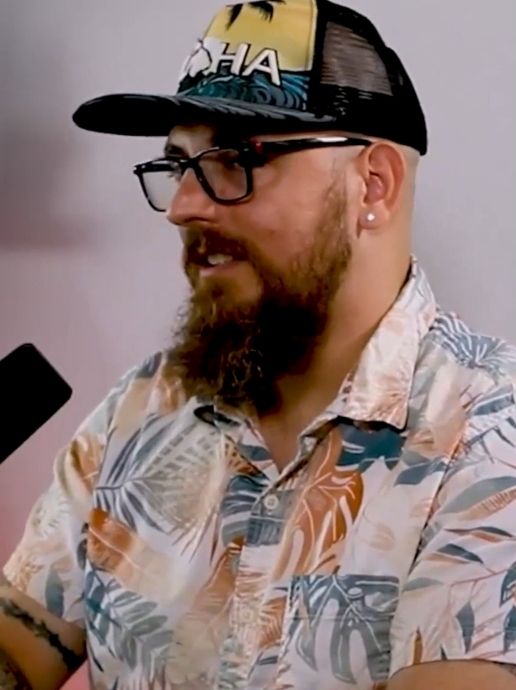 The Average Joe Finances podcast gave him a platform to not only share his experiences but amplify the voices of others navigating debt, investing, and long-term planning. One early episode remains especially meaningful. Financial coach Christine Teh joined Mike for his first guest interview, and the conversation focused not on tactics but on mindset and your relationship with money.
Together, they unpacked how personal beliefs shape financial decisions long before numbers ever do.
“I realized money was a tool,” Mike says. “And I needed to employ it to work for me.”
That realization became foundational. Instead of reacting to money as it came and went, Mike began assigning it purpose. Bills came first. Savings were nonnegotiable. Debt was tackled intentionally, using the snowball method to build momentum through visible wins.
The podcast has since reached thousands of listeners, many of whom credit specific episodes with changing how they think about money. For Mike, the measure of success remains simple.
“If I just impacted one person,” he says, “that means the world to me.”
A Different Relationship with Education
Long before Mike was talking about finances or momentum, he was a student who felt disconnected from school. Growing up on Long Island, education to him felt rigid and uninspiring. He joined the Navy in August of his senior year of high school, three weeks before September 11th reshaped the country and his sense of purpose.
“I had a lot of friends whose families were heavily impacted,” he recalls. “My dad was there. He worked at JFK Airport. He watched the plane go into the tower.”
In the aftermath, Mike considered dropping out of high school to support the national response. His recruiter encouraged him to finish. He stayed, completed school, and formally entered military service shortly after. While he had long been drawn to the military, playing with toy soldiers as a kid and staging neighborhood games of Manhunt, 9/11 cemented that he made the right decision.
I think the value of education is sometimes undervalued. You don’t realize it until you have to use it.
What followed was a 20-year career. Mike married during his first four years, re-enlisted, and steadily moved forward without a clear attachment to higher education. He took his first college class while in the Navy, when instructors were brought aboard ship. He earned a C.
“I wasn’t focused,” he admits. “I had so many other things going on.”
Returning With Purpose
After retiring, Mike’s wife offered a blunt nudge. “You’re home too much,” she told him. “You need to go do something.”
He started looking for work and landed an administrative director role at Navy Information Operations Command Pacific. Eight months in, the executive director left. When the position opened, Mike applied and was promoted.
At the same time, he had recommitted to finishing his bachelor’s degree. The motivation he carried was different.
“One of my motivations for pursuing my degree is career advancement and using the tools I’m learning to be a more effective leader,” Mike says. “I went for a bachelor’s degree in organizational management at UAGC because it aligns with what I do in the military and what I do now in my federal career with the Department of the Navy.”
The role requires structure, efficiency, and decisiveness. Mike already understands how momentum works, how consistency compounds. What he needed was a system that fit his life and supported forward motion. School became that framework.
“I chose UAGC because of the flexibility of taking classes online,” he says. “I’ve tried other online programs, but this one has a structure that supports learning while giving me the tools to succeed. The online classroom is organized, and it helps me build a routine and stick to my goals.”
Operating in Hawaii time could have been a barrier. Instead, Mike treats it as an advantage, using quieter hours to read, engage deeply with coursework, and connect with classmates across time zones. The result is steady progress and measurable growth.
In 2024, Mike graduated from UAGC with a bachelor’s degree in organizational management, earning a 3.96 GPA.
“I didn’t have an appreciation for higher-level education before I realized the tools it was giving me,” he says. “Then you start using them at work, and you realize, this actually helps me do a better job.”
Mike applied concepts from his coursework directly to his role, including SCRUM methodologies to improve efficiency and team performance. The results were tangible. His confidence grew. So did his perspective.
“I think the value of education is sometimes undervalued,” he says. “You don’t realize it until you have to use it.”
Looking Ahead
For the first time since launching his podcast more than five years ago, Mike has stepped away from the microphone. The pause is intentional. He’s pursuing an MBA at a local university while continuing his civilian service and settling into life in Hawai’i.
Education, he says, “remains a tool, not an endpoint. Earning my degree at the UAGC changed everything because it gave me tools to be even more successful in my current career.”
Away from work and coursework, Mike’s proudest role is closer to home. He and his wife are raising two teenage daughters, a season that brings perspective, patience, and purpose.
When asked what he would tell his younger self, Mike redirects the lesson outward.
He says, “Whatever you would tell your younger self, instead tell your children; tell your younger coworkers; tell your subordinates what you would have done differently. Make life better for someone else.”
It’s the same philosophy that has guided his financial journey, his education, and his leadership: progress doesn’t come from a single leap, but from choosing to move forward, again and again.
Asked how he feels now, Mike doesn’t hesitate.
“Elated,” he says. “I’m super happy just to be where I’m at in life right now.”
For someone who built momentum one small win at a time, that feeling didn’t arrive by accident.