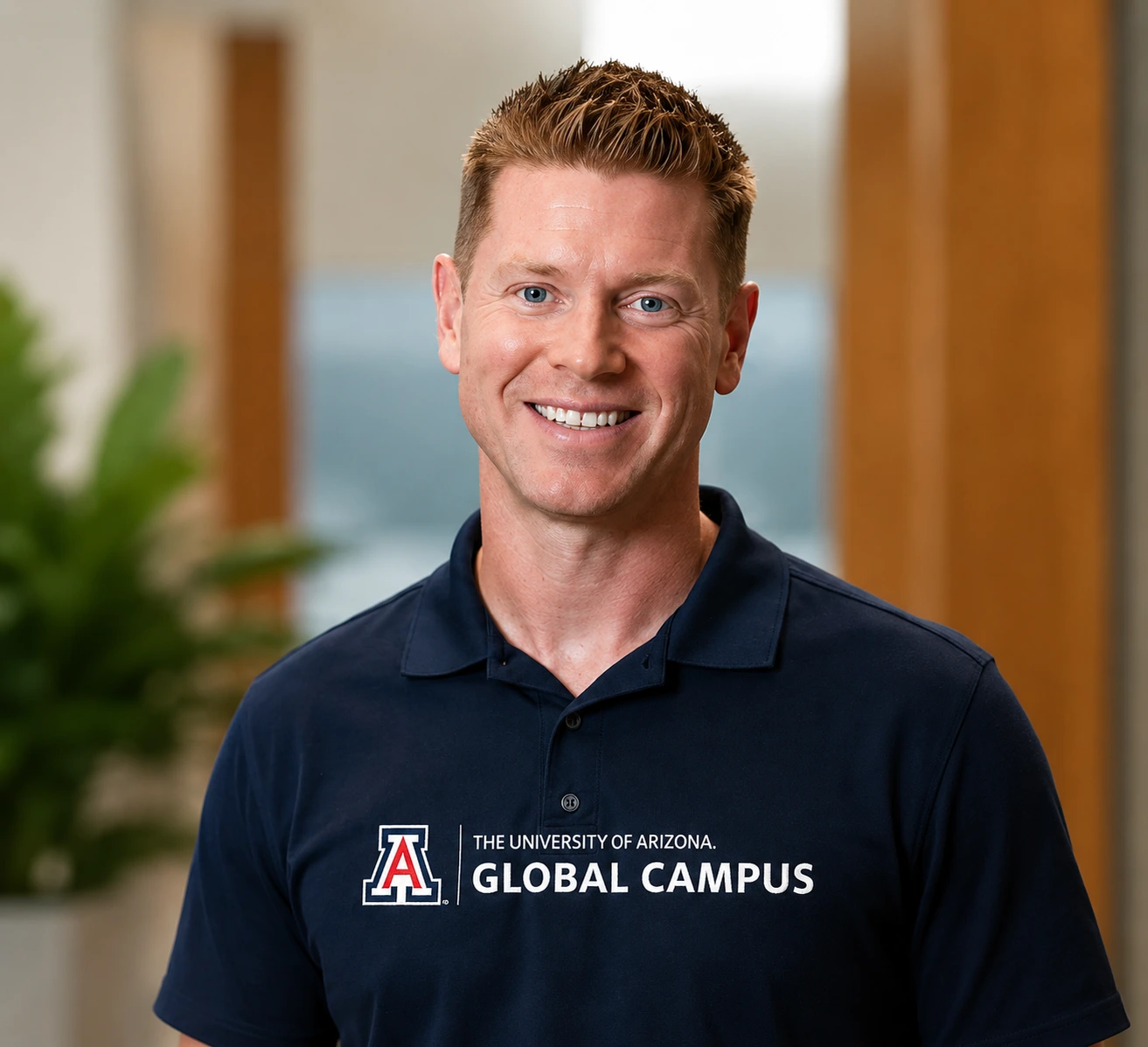
Andrew Williamson’s life has never followed a straight line — and that may be exactly what prepared him for where he is now.
Born in Japan and raised across Oklahoma, Nebraska, South Korea, and beyond, Andrew describes himself as a self-proclaimed “Air Force brat.” His childhood was defined by movement, adaptability, and constant transition.
“I never went to the same school for more than two years,” he recalls.
Even in high school, stability was relative, two years in a traditional classroom followed by two years online.
Through it all, Andrew admits he wasn’t a model student. Homework was often late or unfinished, video games regularly won out, and school felt more like an obligation than an opportunity. And quite frankly, he didn’t expect things to change.
At 19, Andrew dropped out of community college and moved to Austin, Texas. Instead of continuing in school, he entered the workforce in tech. His entry point was a web hosting company, where he discovered his aptitude and his appetite for learning.
“I advanced there and learned a lot,” he says. “I was there for four years, which is the longest I’ve ever done anything at that point.”
That role laid the groundwork for a career in site reliability engineering (SRE), what Andrew jokingly calls “the guy who keeps the website online.”
Today, he works for Meshify, a subsidiary of HSB and Munich Re, in a role that blends deep technical skill with collaboration and problem-solving.
When Technical Expertise Wasn’t Enough
As Andrew’s career progressed, he began to notice a gap — not in his technical abilities, but in his understanding of the broader business landscape.
“I wanted to expand both my career horizons and my lens of understanding,” he explains. “I could think like a developer, but what about the product manager, the accountant, the HR professional, the executive?”
Andrew realized much of his role involved communicating with stakeholders across the organization. Understanding business language, financial statements, and operational strategy became essential.
“I also began to realize that a lot of my job is mentoring my peers,” he adds. “Helping really smart developers work more effectively, removing roadblocks, that’s a form of leadership.”
Andrew’s path became clear, and he understood what he needed to do next.
Returning to school felt different this time. The University of Arizona Global Campus (UAGC) offered the flexibility Andrew needed and aligned naturally with his background. Both of his parents were early adopters of online education and had taught business courses online.
The Bachelor of Arts in Business Administration program gave Andrew exactly what he was looking for.
“The accounting class was probably the most useful,” he says. “My mom always used to say accounting is the language of business. And now I actually understand it.”
Beyond coursework, Andrew gained skills he applies daily: time management, breaking complex projects into smaller tasks, and learning from different leadership styles modeled by his instructors.
A First Graduation
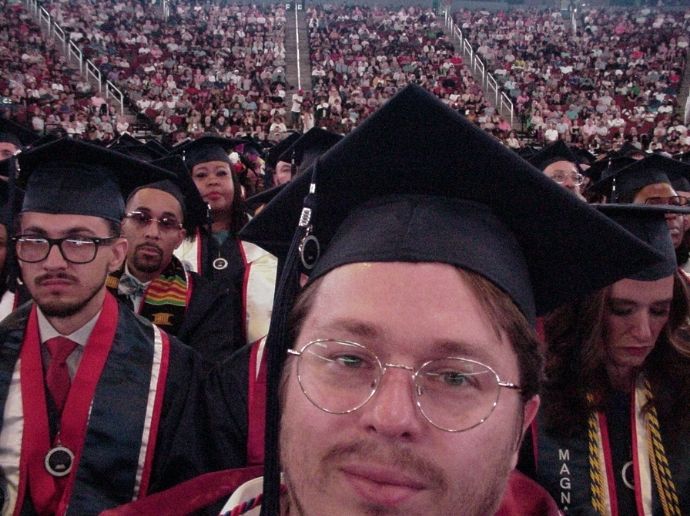 In December 2024, Andrew earned his bachelor’s degree, marking his first higher ed graduation ceremony. His parents, older brother, and husband were there to celebrate the milestone.
Looking back on his UAGC journey, Andrew points to professional and personal growth from the experience. At work, he’s taken on more responsibility, leading meetings and coordinating efforts across teams. Outside of work, his education has expanded how he serves others.
“My education has opened doors for serving my community as well,” Andrew says. “I serve on the board of my church, and I serve on the finance committee there. Drawing from my business and general education experiences, I’m better able to serve my faith community and God.”
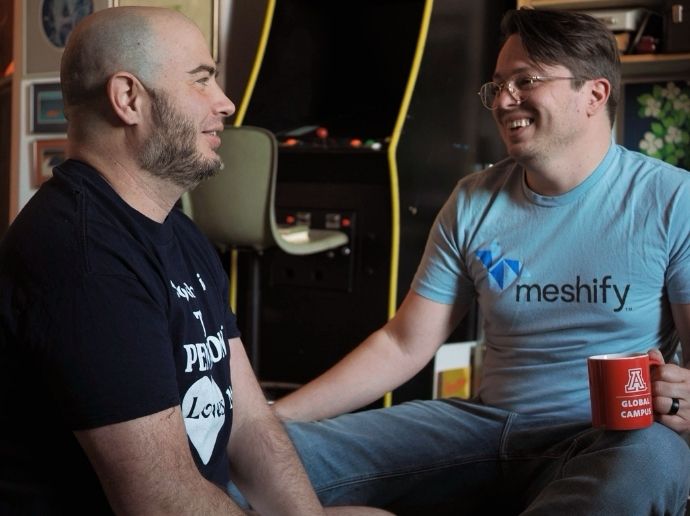
That growth was made possible by a strong support system. His parents helped him navigate everything from APA formatting to instructor expectations. His husband, Patrick, provided constant encouragement: bringing meals, brainstorming ideas, and sitting beside him during late-night study sessions.
“Any time I was up late working on a paper,” Andrew says, “he was right there with me.”
Tools, Curiosity, and What Comes Next
Andrew is practical and reflective in his advice for others considering a college degree. He recommends using tools — writing apps that simplify APA formatting and productivity techniques like the Pomodoro method — to reduce friction and stay focused.
“If you’re fighting the tedious minutia,” he says, “look for something that helps you get through it.”
But above all, Andrew encourages curiosity.
“Education isn’t just a piece of paper,” he explains. “The way you grow — professionally and personally — is by staying curious and continuing to learn.”
That mindset shows up everywhere in his life. He and his husband collect VHS tapes and digitize old films in their spare time. In 2026, they plan to travel together to Japan — the place where Andrew’s story began.
Andrew is quick to acknowledge the instructors who shaped his experience, including Bill Davis, who offered thoughtful mentorship, and the late Dr. Clifford Blizard, chair of the honors program.
“He challenged every idea,” Andrew recalls. “He was the kind of person with whom you could vehemently disagree and yet still have an enlightening and fulfilling discussion.”
For Andrew, success isn’t defined by a linear path. It’s defined by curiosity, service, and the willingness to keep learning wherever the journey leads next.