Key Takeaways
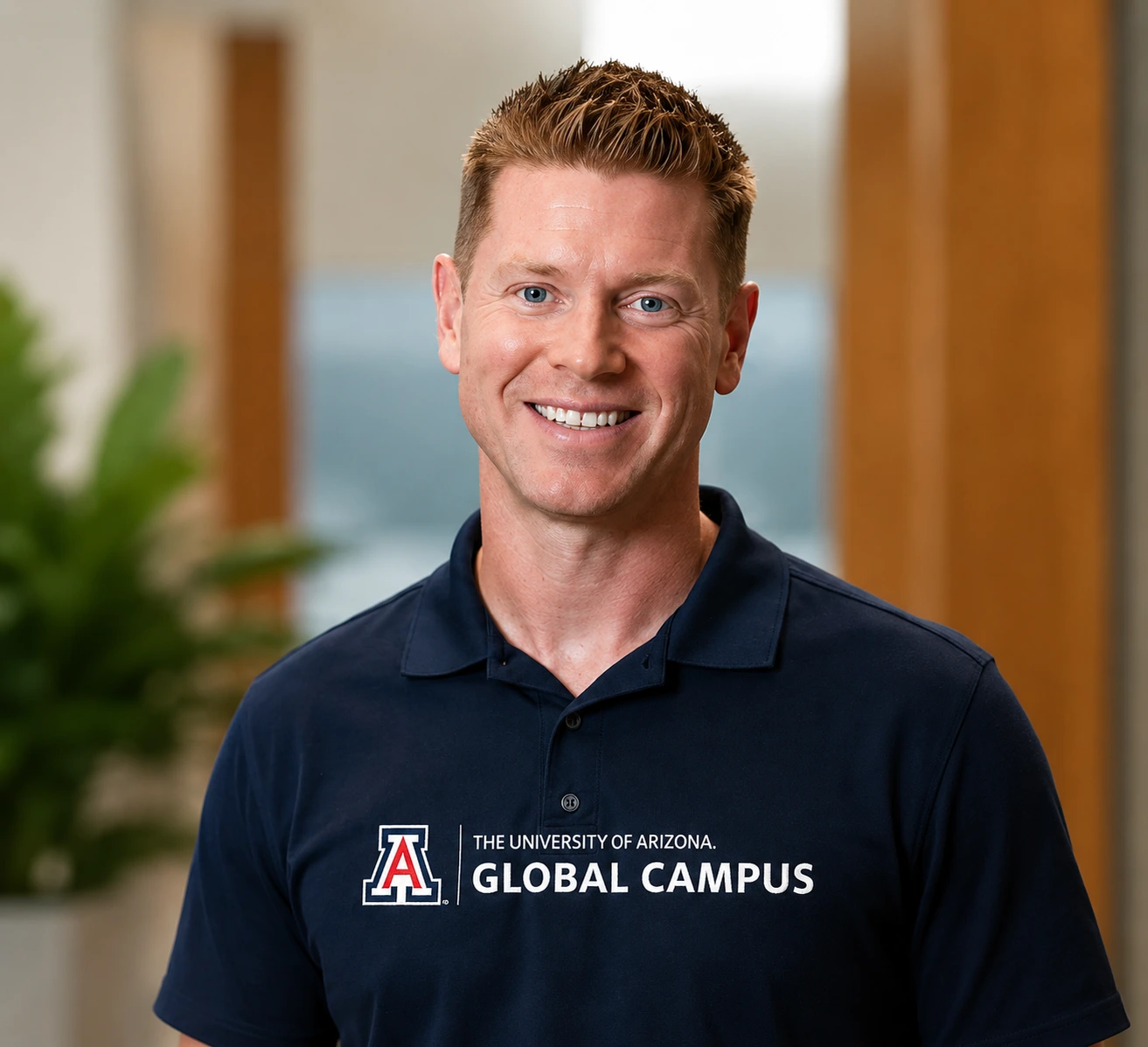
- The University of Arizona Global Campus (UAGC) student Daniel White is earning his MS in Technology Management with the support of his military education benefits.
- This will be Daniel’s second degree from UAGC; he previously earned a BA in Business Information Systems.
- Daniel initially attempted to attend college directly after high school, but when it became financially impractical, he chose to enlist in the United States Marine Corps.
- After completing his military service, Daniel launched a career in IT, quickly developing his skills and outperforming many of his peers.
- He later left the IT industry to pursue entrepreneurship, opening a restaurant. When the demands of running the business became unsustainable, he attempted to return to IT and discovered what he describes as a “credential ceiling.”
- Although some career paths ultimately closed, Daniel is grateful for the stability that IT provides and credits UAGC with helping him overcome imposter syndrome while also supporting the military veterans he mentors.
- An unexpected benefit of his UAGC experience was finding a sense of community and purpose through the university’s Student Veterans of America (SVA) chapter.
--
Curiosity, Commitment, and Credential Ceilings with UAGC Student Daniel White
The dinner rush is building.
Steam rises from boiling pots. Orders stack up. The sound of sizzling seafood fills the kitchen as Daniel White moves from station to station, trying to stay one step ahead of his employees and the next ticket. Somewhere in the chaos, his cell phone vibrates again.
Maybe it's his wife. Maybe one of the kids. Either way, he can't answer. This isn't what he envisioned when he opened a seafood restaurant in Pennsylvania.

The former Marine, IT professional, and current student at the University of Arizona Global Campus (UAGC) had imagined himself overseeing the business from a distance — hiring talented cooks, managing operations, and watching his entrepreneurial dream take shape. Instead, he found himself spending long days and nights in the kitchen, cooking, troubleshooting, and carrying out responsibilities that seemed to multiply by the hour.
The restaurant wasn't running itself. And the more it needed him, the more he found himself thinking about the career he had left behind; the predictability of information technology; the strategic challenges of solving problems in the financial technology (FinTech) industry; and the stability he once took for granted.
“I'm always inquisitive,” Daniel explains. “I'm always curious about trying new things, and I like to cook, so that was part of my desire to open the restaurant. But I didn't plan on being the everyday cook, which is what it ended up being.”
Standing in the kitchen, surrounded by the sounds and pressures of a business demanding his full attention, a question began to take shape: What's next for me?
The answer would eventually lead him back to higher education, back to a goal he had postponed decades earlier, and ultimately to UAGC, where today he is pursuing a Master of Science in Technology Management while helping fellow veterans navigate their own educational journeys.
Hitting the Credential Ceiling
When Daniel made the difficult decision to close his restaurant business in 2022, he simultaneously decided to return to the technology sector.
“I have a fallback plan,” he recalls thinking. “I'll just go back to FinTech.”
The venture may not have succeeded financially, but Daniel has no regrets.
“One of the qualities I pride myself on most is my willingness to take risks, commit fully, and learn from every experience,” he says.
As he began applying for new positions, Daniel encountered a challenge he had not expected. For the first time in his career, he found himself competing for opportunities where experience alone wasn't enough. Many of the leadership positions he wanted required credentials he had never formally completed.
“The beautiful thing about being a technology management major is that I'm taking a lot of the things I'm doing at work and bringing them into school."
“The spark was a realization that my extensive field experience had hit a ‘credential ceiling,’” he admits. “Despite managing enterprise-level security and infrastructure, I found that senior leadership roles often required the formal degree I had put on hold years ago.”
The realization forced him to revisit a resource he earned years earlier through military service but never fully utilized: his education benefits.
“I decided it was time to stop ‘impostering’ and finally earn the credentials that match my capabilities,” Daniel says. “I wanted to secure a stable, strategic future for my family and honor the high standards my parents set for me.”
Within months of closing the restaurant, he enrolled at UAGC.
A Marine’s Path to Mentorship
Before his career in technology, Daniel served as a platoon sergeant in the United States Marine Corps. He enlisted in 1999 after discovering that his first attempt at earning a college degree had become financially out of reach.
“My journey hasn’t been a straight line,” he says. “It’s been a series of leadership lessons that took me from the track to the front lines in Iraq, and finally back to the classroom to finish the degree that life once put out of reach.”
When he enrolled at UAGC, he was focused primarily on one objective: earning his degree.
He began working toward a Bachelor of Arts in Business Information Systems. Not long after enrolling, Daniel began receiving emails about a newly launched Student Veterans of America chapter at UAGC.
Those meetings would become one of the most meaningful parts of his UAGC experience. What started as a search for credentials quickly became a search for connection, mentorship, and service.
“It ended up being the right choice, obviously,” he says.
Daniel’s curiosity evolved from passive involvement to full participation. In 2025, he became president of the UAGC Student Veterans of America chapter. Since then, he has attended the Student Veterans of America National Conference (NATCON) and has mentored numerous veteran and active-duty students. One mentoring relationship stands out.
“You don't have to have a leadership role to be a leader. If you're making it easier for whoever you're reporting to, you're being a leader.”
The first person Daniel mentored was Vander Johnson, a recently retired Army veteran transitioning to civilian life. While they were in the chapter together, Daniel got to watch Vander successfully navigate the transition by using a lot of the tools made available by the SVA, reinforced the value of the chapter’s mission. Not only that, but Vander was voted into Daniel’s SVA Chapter cabinet as Public Relations Officer after he mentored him.
”That was special because a lot of the advice I was able to give him was right on time,” Daniel says.
For Daniel, the chapter fills an important gap for students in an online environment.
“It's a young chapter, but it's been very meaningful,” he says.
The sense of connection created from participating in groups such as the SVA is why he actively encourages veterans to get involved.
“When I get to do an intro in my classes, I'm always mentioning the SVA,” he says. “You never know what kind of impact you can have on lives.”
The Power of Community
Daniel’s experiences, whether through the SVA or his educational journey have been memorable. But one UAGC course had a particularly lasting impact.
As part of a general education capstone project, Daniel researched how veterans cope after war. During the process, he visited a Veterans of Foreign Wars post and met older veterans whose experiences reminded him of the importance of maintaining connections.
The project prompted him to reconnect with Marines he had served alongside years earlier.
The experience reinforced a lesson he now shares with others.
“You don't have to start building a new community and lose old friendships, especially with the veteran community,” he says. “Your brotherhood is your community.”
The experience also helped him reflect on another challenge many veterans face: imposter syndrome.
“Since I've been at SVA, I've heard about imposter syndrome a lot,” he says. “That happens with a lot of veterans, especially veterans transitioning from active duty into the workforce.”
For Daniel, those feelings stemmed less from military transition and more from his professional experience.
“I was outperforming my peers, and I felt like we were all on the same level until I had that break in employment,” he says. “That's when I realized how important the degree was.”
The experience ultimately reshaped his perspective.
“I realized that I always had a growth mindset, but a degree would be tangible proof of that,” he explains.
Turning Experience Into Strategy
Daniel’s graduate studies in technology management are directly influencing his professional work — and vice versa.
The master's degree program has helped him build upon decades of technical expertise while developing the leadership and business skills needed to guide organizations at a strategic level.
“The beautiful thing about being a technology management major is that I'm taking a lot of the things I'm doing at work and bringing them into school,” he says.
That practical connection has created a powerful learning experience.
“School is helping work, and work is definitely helping school,” he says. “It's a good synergy.”
While technology remains his professional foundation, his focus has shifted toward leadership and strategy.
“Learning how to present that to upper management, make a business case, and align technology with business strategy is really important,” he says.
The program has helped him move beyond technical execution and toward the kind of strategic leadership roles he once felt were just beyond reach.
“One of the things that I pride myself on is always trying something new. Be curious.”
Throughout his career, military service, and educational journey, Daniel has developed a simple philosophy.
“You don't have to have a leadership role to be a leader,” he says. “If you're making it easier for whoever you're reporting to, you're being a leader.”
He also encourages students not to wait for opportunities to arrive on their own.
“Don't settle,” he says. “One of the things that I pride myself on is always trying something new. Be curious.”
For those looking to improve themselves, his advice is practical.
“Try to do something you're already interested in and just make it better,” he says. “Keep it simple.”
A New Mission
The impact of Daniel’s degree has been personal and professional.
“It has completely shifted my mindset from technical execution to strategic leadership,” he says. “Earning my degree has provided the keys to the rooms I've been trying to enter for years.”
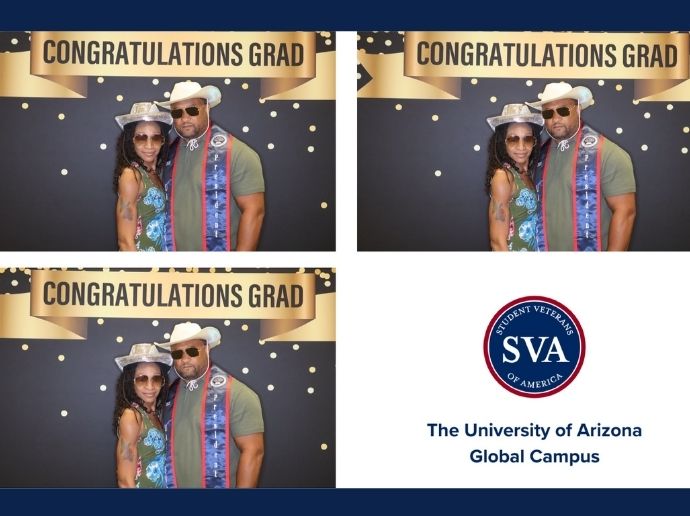 As he pursues director-level opportunities in the defense and FinTech sectors, he remains equally committed to helping others succeed.
“It has given me a platform to mentor other veterans through our UAGC SVA chapter,” he says, “helping them navigate their own benefits and academic paths so they can reclaim their leadership potential as well.”
Years after stepping away from the restaurant business, Daniel still finds himself in the kitchen, but now it's on his own terms. When he isn't working or studying, he's often grilling, smoking food outdoors, or competing in trivia games with family and friends. He's also a devoted sports fan.
“I’m a die-hard Eagles and Arsenal FC fan,” he says. “I never miss their games.”
Standing in that restaurant kitchen years ago, Daniel wondered what would come next. Today, the answer is clearer than ever. Continue learning. Continue leading. Continue helping others discover opportunities they may not yet see in themselves.