Key Takeaways
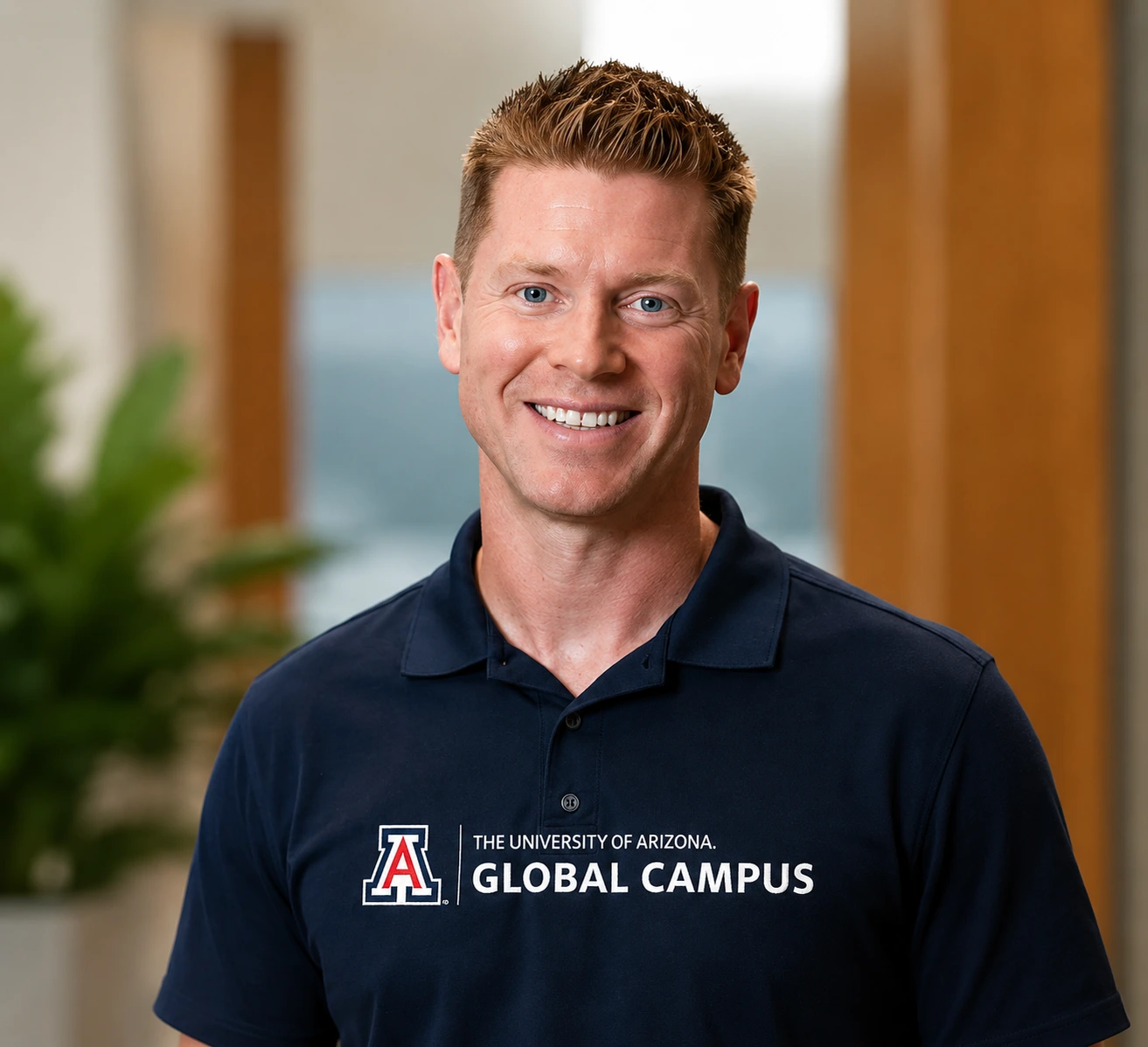
- The University of Arizona Global Campus (UAGC) alumna Lema Pashtunyar earned her Master of Public Health in 2025.
- Lema chose this degree because she grew up surrounded by people in the health care field and has always had a desire to help others.
- Her Afghan culture and homeland have played a significant role in shaping her identity and inspiring her educational journey.
- Lema credits her mother for instilling her strong work ethic, passion for education, and desire to show other Afghan girls that achieving an education is possible.
- Lema hopes to become a physician who leads with empathy, believing that trust and understanding are essential to providing quality care.
- One of Lema’s proudest moments at UAGC was completing her practicum, where she applied her research skills and presented her findings to a class of aspiring health care providers.
- Throughout her educational journey, Lema emphasizes one message: You can achieve anything you set your mind to when you are willing to work for it.
UAGC Alum Lema Pashtunyar on Learning Without Limits
More than three years after girls were barred from attending high school in Afghanistan, millions remain without access to formal education. For Lema Pashtunyar, those headlines are not distant international news. They are reminders of the country where she was born and of the opportunity that has shaped every chapter of her life.
Today, Lema is pursuing her lifelong goal of becoming a physician after earning a Master of Public Health from the University of Arizona Global Campus (UAGC) in 2025. But long before graduate school, long before she imagined wearing a white coat, she learned a lesson that continues to guide her: education is more than a pathway to a career. It is an opportunity that can change the course of a life.
That lesson didn't begin in a classroom. It began at home.
The First Teacher
Imagine being a young girl sitting in a classroom, hearing an explosion in the distance and wondering whether you would need to run before the lesson was over. Preparing to leave everything behind at a moment's notice, never knowing what the next day would bring. Then imagine being told you could no longer go to school at all because you were a girl. This was Lema’s reality.
"I grew up in Afghanistan, where for much of my childhood, girls were not allowed to go to school," she says. "It wasn't even something people questioned. It was just the way life was. I stayed home, watching a world I wasn’t allowed to be part of."
Eventually, Lema’s family had to make the difficult decision to move from their hometown of Jalalabad to Kabul so she and her siblings could receive an education.
"We went to school in secret, always afraid someone would find out," Lema recalls. "Sometimes we would be sitting in class and hear explosions nearby, and everyone would run, not knowing what would happen next."
Even amid that uncertainty, Lema found an example of perseverance much closer to home. As the oldest of nine children—five sisters and three brothers—Lema spent much of her childhood watching the person she admired most pursue an education of her own as well.
Her mother had once been an exceptional student, consistently ranking at the top of her high school class. But after the Taliban first took control of Afghanistan in 1996 and girls' education was severely restricted, her own education was interrupted. She married young, started a family, and years later returned to school to earn a degree in dentistry while raising four children. For Lema, that determination became her first lesson in resilience.
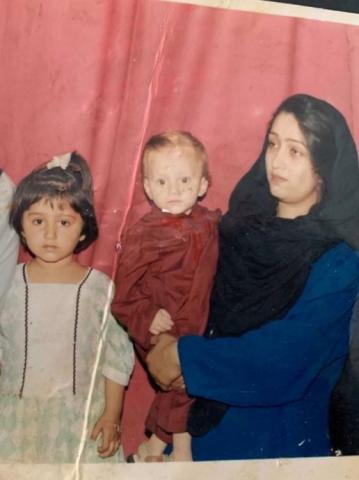
Nafisa — taken around the time Nafisa began dental school.
“Although I was very young, the image that has stayed with me all these years is my mother sitting on the floor late at night in Jalalabad, Afghanistan, surrounded by stacks of printed chapters, studying by the glow of a small kerosene lamp,” she recalls. “I can still picture her carefully turning each page while the rest of the house slept.”
Lema remembers trying to mimic her mother’s studying habits. Whenever she had an exam in elementary school, she would gravitate to the same spot on the floor and turn on the same lamp.
“Looking back, I realize I wasn't just copying her study habits; I was learning her resilience,” Lema says.
When rumors spread that the Taliban would once again close girls' schools, her family left everything behind in Kabul and immigrated to the United States in 2012. Lema was 11 years old.
"Coming here showed me something I had never truly experienced before: that girls have the same right to an education as anyone else, and that we can become anything we dream of."
As an Afghan woman who bore witness to the barriers many Afghan women face in accessing education opportunities, including in her very own home, Lema developed a strong sense of purpose.
Watching her mother reclaim opportunities that had once seemed out of reach showed Lema that she, too, could do the same. She doesn't describe becoming a physician as simply achieving a personal goal. Instead, she sees it as a way to honor women like her mother.
“Because of my mom, I grew up believing that education is something no one should be able to take away from you, and that education is worth fighting for.”
Learning to Care
Medicine is a familiar part of Lema's life. Her mother pursued dentistry, and several of her mother’s sisters became physicians. But one experience transformed that familiarity into purpose.
After losing her grandmother to heart disease, Lema witnessed the role physicians played not only in treating patients but also in supporting families through moments of uncertainty and grief.
"I wanted to be that sense of hope," she says. "I wanted to be able to contribute and give that hope to the individuals waiting there for their loved ones."
As her interest in medicine deepened, she realized she also wanted to understand the factors that influence health long before patients arrive at a hospital. That realization led her to public health.
Looking Beyond the Diagnosis
In 2023, already armed with a bachelor’s degree in biology from another institution, Lema enrolled in the Master of Public Health program at UAGC. She was also working full time as a Medical Operation Support Analyst at Leidos QTC. The role is an opportunity to give back in a deeply personal way.
“Today, I work with veterans who once served in Afghanistan. When I was a child, I would see them pass by in tanks without understanding who they were. Now, I help them with their disability ratings, and it gives me a sense of purpose, like I’m giving back to people who, in some way, helped make my education possible.”
Through her employer's education partnership with UAGC, tuition assistance helped make graduate school more accessible.
"Knowing that support was available helped me reduce the financial burden of graduate school and allowed me to focus on learning," she says.
She was equally drawn to the program's flexibility and the opportunity to complete a practicum that connected public health principles with clinical practice. Yet one memorable lesson came before her coursework truly began.
"Patients are not just a diagnosis. They all come from different backgrounds, and to be a great physician, you have to know their story and have that compassion."
During her first discussion board assignment, Lema introduced herself to classmates who included physicians, nurses, physician assistants, and health care professionals from around the world.
"There was so much to learn," she says. "Not just from the courses or the professors, but from all these individuals."
Those conversations reshaped the way she thinks about medicine.
"Patients are not just a diagnosis," she says. "They all come from different backgrounds, and to be a great physician, you have to know their story and have that compassion."
Throughout the program, faculty reinforced that perspective. Lema credits Dr. Dana Hill with providing detailed feedback that challenged students to improve while remaining deeply invested in their success.
"Resilience, education, and purpose can open doors that once seemed impossible. No matter where you start, keep moving forward. Your dreams are worth pursuing, and your story is still being written."
One of her proudest accomplishments came during her practicum, where she conducted research on HIV and AIDS. Applying classroom knowledge to a real-world public health issue deepened her appreciation for research and its role in advancing prevention and treatment.
"I loved every part of my practicum, from conducting HIV and AIDS research to writing my paper and presenting it,” she says. “It deepened my appreciation for the role research plays in advancing prevention and treatment."
By the time she completed the program, she realized her master’s degree had strengthened more than her academic foundation. It had changed the kind of physician she hopes to become.
The Physician She Hopes to Become
Graduate school, a full-time career, and her medical school journey often competed for the same hours in the day.
"I questioned myself multiple times if I could do it or if I was even supposed to do it,” she says.
When that happened, she found herself returning to the same example she had witnessed throughout childhood.
She remembered her mother balancing family responsibilities while pursuing dentistry, breaking enormous responsibilities into manageable steps until the impossible gradually became possible. That became Lema's strategy, too.
“What helped me push through was remembering why I started in the first place,” she explains. “I thought about the opportunities that I’ve been given, the sacrifices my family made, and the example I want to set for others. So, instead of focusing on how far I still had to go, I learned to take things one step at a time and stay connected to my purpose."
Lema graduated from UAGC in 2025 with her Master of Public Health, but she views the degree as another beginning rather than a destination.
She hopes to specialize in either oncology or cardiology — fields that allow physicians to build lasting relationships with patients while helping them navigate some of life's most difficult diagnoses.
"I hope to combine clinical medicine with a compassionate, patient-centered approach," she says.
The lesson she carries from graduate school extends beyond textbooks and research.
"Effective health care requires understanding not only a patient's medical condition, but also the personal, social, and environmental factors that shape their health," she says.
To Lema, empathy is not separate from medicine. It is part of good medicine. Understanding a patient's culture, experiences, and circumstances builds trust. Trust strengthens care. And care becomes more effective when patients know they are understood.
Reflecting on her own journey, Lema believes education has done more than prepare her for a profession. It has shaped the person she hopes to become.
"Resilience, education, and purpose can open doors that once seemed impossible," she says. "No matter where you start, keep moving forward. Your dreams are worth pursuing, and your story is still being written."
Paying It Forward
If Lema could speak to Afghan girls today, she wouldn’t be speaking only as a graduate or as a future physician. She would speak as someone who understands what an education can make possible.
She sees her younger self in girls whose classrooms remain closed. She also sees the steady determination of her mother — the woman who showed her that even when opportunities are delayed, the desire to learn can endure.
"I want them to know that their dreams are valid, their voice matters, and their worth is not defined by the opportunities that are currently available to them," Lema says. "I want them to continue to learn in every way they can, hold on to hope, and never stop believing in their potential and what they can do."
For Lema, becoming a physician is a way of honoring the women who shaped her, serving the people who will one day place their trust in her, and carrying forward a belief that has guided her since childhood: education has the power to transform lives.
It is a lesson she first learned by watching her mother reclaim an opportunity once denied to her.
Now, it is one she hopes to pass on.
If you’re ready to step into your purpose and expand your professional potential, explore our program offerings and speak with an advisor today.
--
UAGC degree programs are not designed to meet the academic requirements and/or prerequisites needed to apply for medical school.
UAGC degree programs are not designed to meet the state educational requirements for a specific professional license or certification in any state. Students seeking licensure or certification in a particular profession shall carefully research the requirements prior to enrollment and regularly review the requirements as they are subject to change. Requirements vary by state. The University of Arizona Global Campus does not guarantee that any professional organization will accept a graduate’s application to sit for any exam for the purpose of professional certification. Further, a criminal record may prevent an applicant from obtaining licensure, certification, or employment in their field of study.