Key Takeaways
- Rebecca Campbell's lifelong love of reading inspired a career dedicated to helping students discover confidence through literacy.
- As lead faculty for GEN 104 and an English instructor at the University of Arizona Global Campus, Campbell is passionate about supporting adult learners as they begin their college journeys.
- Inspired by a family of educators, Campbell believes teaching is an opportunity to help others grow, build confidence, and recognize their potential.
- Campbell encourages students to embrace mistakes as a natural and valuable part of learning, reminding them that confidence is built through persistence, not perfection.
- She believes education has the power to transform lives at any age and is committed to helping students realize they are more capable than they think.
--
Turning the Page with UAGC Faculty Rebecca Campbell
"If I could do anything and earn a living from it," Rebecca Campbell says, "it would be to talk about books all day."
As it turns out, that's exactly what she built her career around.
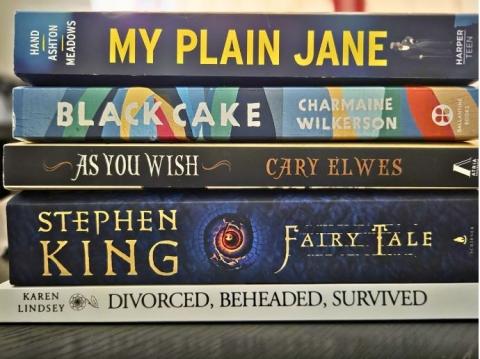
This summer, Campbell is revisiting the world of “Jane Eyre.” Earlier this year, she immersed herself in the scholarship of composition theorist David Bartholomae, reflecting on how his decades-old ideas about reading and writing still resonate with today's students — even as artificial intelligence, social media, and an endless stream of online information have transformed the way people learn.
"I've been kind of marinating on some of those ideas and seeing how we can still apply them today," says Campbell, lead faculty in the Department of Learning and Information Studies within the College of Integrative Learning at the University of Arizona Global Campus (UAGC). "There are so many more resources available now, but there's also so much that it can be overwhelming. I'm thinking about helping students become more aware of what's out there and how to find the good stuff."
For Campbell, reading isn't simply a pastime or a professional responsibility. It is the thread that has woven through every chapter of her life.
Today, she helps UAGC students discover that reading is about far more than getting through a textbook. It's about building confidence, thinking critically, and developing the skills to navigate everyday life.
"Reading and writing are powerful tools that we use each day,” Campbell says. “I love that moment when students realize they can make reading and writing work for them while maintaining their unique voice."
A Love Story Written in Books
Long before Campbell became an educator, she was a reader.
One of her earliest literary memories begins with a box of well-worn “Nancy Drew” mysteries that once belonged to her mother. She raced through every book inside, captivated by the teenage detective's adventures. When she reached the last page of the final mystery, she wasn't finished; she headed to the local library in search of the rest of the series.
"I was immediately drawn to the characters and the stories. Before long, I realized I was always going to have a book in my hands. Studying English felt like the natural choice because I couldn't imagine a life where reading wasn't part of it."
That love of books never faded.
As the daughter of a Navy family, Campbell spent much of her childhood moving from place to place. Yet one thing remained constant: books. She knew her professional journey would orbit around literature in some capacity, but after earning her bachelor's degree in literature and writing studies from California State University San Marcos, life took an unexpected turn.
She married an Army soldier and moved overseas before she could reach her next educational milestone.
With time to reflect on what she truly wanted to do, the answer became surprisingly simple.
"If I could do anything and earn a living from it, it would be to talk about books all day," she recalls.
Reading and writing weren't the only passions that shaped Campbell's path. Teaching, too, was part of her family's legacy. Her father served as a nursing educator in the Navy, teaching nurses and Marine Corpsmen, and nearly every one of Campbells closest relatives became teachers.
"I'm really proud that so many of us are educators. We all teach something, and we share the same goal of helping people discover something they didn't know they were capable of," Campbell says.
Learning Never Has an Expiration Date
Campbell's belief in education as a lifelong pursuit was shaped by watching her parents return to school while raising a family.
Her father drove to campus while her mother completed one of the earliest forms of distance education, years before online learning became commonplace.
"I think it's important for anybody to be able to continue their education at any point they want or need to," she says. "It was a gift to me to see my parents do that because I never doubted that I could go back to school whenever I wanted to."
Her father later earned his PhD in his 60s — a reminder that learning has no expiration date.
Campbell's own educational path reflected that same flexibility. When she did return to school, she earned one master's degree through distance education and another entirely online while working at the UAGC. Her journey helps her understand adult learners because she has walked a similar path herself.
"I know many students didn’t grow up hearing that it's okay not to go to college immediately after high school, that education will still be there when the time is right," Campbell says. "I feel it's important that I can be there and help them see that if they're doing what's best for them, they're doing the right thing."
Teaching Students How to Learn
For more than 15 years at UAGC, Campbell has supported students in a variety of roles, beginning in the registrar's office before moving into academics and eventually becoming faculty. Now, she teaches first-year English composition and serves as lead faculty for Gen 104, College Reading Strategies.
Many of the students she meets are taking their first college course. Many are also wondering if they belong.
"Students often come into their first course carrying a lot of uncertainty, wondering if they belong here. Helping them replace that uncertainty with confidence is one of the most meaningful parts of being an educator."
Although reading strategies are at the heart of her work, Campbell believes she teaches something even more fundamental. She teaches students how to learn.

the creativity she enjoys outside the classroom.
"Sometimes it's not about reading," she says. "It's about reading in the way that's most effective for what you're doing."
When students tell her they're struggling, Campbell doesn't assume the problem is their ability. Instead, she starts by identifying the obstacle.
"I try to help them narrow down what they're struggling with," she says. "Is it the reading itself? Are they feeling overwhelmed? Do they need to get into the right mental space? We'll take a different approach depending on what it is."
Sometimes the solution has nothing to do with reading.
“A busy parent may just need a few quiet moments after getting the children to bed before opening a textbook,” she explains. “Another family might create clear expectations around study time so children understand when interruptions are necessary — and when they can wait.”
Other times, the strategy is academic.
“Some students benefit from reading a passage two or three times,” Campbell says. “Others comprehend better when they listen to audio while following the text. Students with dyslexia or other learning differences may need additional accommodations. The point is: despite what you’ve heard, you don’t have to get it the first time. That's really just not how it works."
For Campbell, there is no universal formula for becoming a stronger reader.
"It's about figuring out what works for that student," she says. "Then we go from there."
Building Something That Lasts
Helping students become stronger readers didn't stop with her own classroom.
Seven years ago, Campbell helped create GEN 104 after faculty noticed many students were entering composition courses without the reading strategies needed to succeed.
"It’s not hard to notice when students aren’t doing the reading that is necessary to write well," she says.
Instead of asking composition instructors to teach reading and writing simultaneously, Campbell and her colleagues created a course devoted entirely to reading strategies.
"It was the right place, the right time," Campbell says. "We had the right leadership, the right support, and the opportunity to make it happen. And GEN 104 was born."
What began as an experiment has become one of Campbell's proudest accomplishments.
"It could have been considered an experiment seven years ago, but it's still going," she says. "Students are so glad they took it."
Last year, the course reached another milestone with the publication of its own open educational resource textbook.
"We wanted something that followed the heart of the course," she says. "To let students figure out what works for them with a guiding instructor instead of telling them. It isn't one-size-fits-all."
That philosophy has earned recognition beyond the classroom. In 2025, GEN 104 received an Honorable Mention in the Association for Distance Education and Independent Learning (ADEIL) Course Awards for its innovative approach to helping students strengthen literacy skills that support success in college and beyond.
For Campbell, however, the greatest reward isn't an award.
“Success to me is hearing students say they entered their next class believing they could succeed.”
Reading Beyond the Classroom
One of Campbell's favorite parts of teaching adult learners is watching them realize the skills they're building don't end with an assignment.
"I like being able to help them connect what they're learning in class to what's going on in their life right now," she says.
The same reading strategies that support success in the classroom can also help students confidently navigate everyday tasks, from understanding medical paperwork to reviewing legal documents or workplace policies.
"When you read well and write well, you can navigate the world so much more easily," she says. "Everything gets easier."
For Campbell, literacy isn't simply an academic skill. It's a life skill.
When students are thriving, it’s not necessarily about having perfect grades. Rather, it’s about their persistence and effort.
"The students who do well in my class are determined and tenacious," she says. "They're not always super confident, but they're willing to put in the work."
She reminds students that mistakes are part of learning.
"If you mess up, it's okay — that's what school is for. I'll help you figure out what went wrong and how to do better next time."
Sometimes those efforts come back to her in the form of end-of-course surveys.
"They'll say, 'I was reading better. I was writing better by the end of class,'" she says. "I'm like, 'Yep. That's why I'm here.'"
The Next Chapter
Campbell strives to give every student something more valuable than just graded assignments.
"I hope students leave my class with a belief in their own ability to read and write."
It is a lesson that began with a box of well-loved “Nancy Drew” novels and has continued through every chapter of her own life. Today, Campbell passes that gift on to others— one student, one strategy, and one page at a time.
Perhaps your next chapter begins with a novel you've been meaning to read. Or a textbook reopened after years away from school. Maybe it's the confidence to understand a medical form, write a business proposal, change careers, or finally earn the degree you've always wanted.
Reading teaches you more than words. It teaches you how to ask questions, solve problems, think critically, and imagine what comes next.
Where might your next page lead?
Explore the academic programs at UAGC and discover where your learning journey could take you.
Quick Q&A: Life Beyond the Classroom
UAGC: What’s your favorite way to spend a free day?
Rebecca Campbell: “Reading, of course.”
UAGC: What genres are always on your bookshelf?
Rebecca Campbell: “I love sci-fi and fantasy — fantasy especially. I think a lot of people might assume an English teacher always wants to read the classics, and I do love them, too. But fantasy is probably my favorite.”
UAGC: Name one hobby you enjoy outside of reading.
Rebecca Campbell: “Crocheting. I like to crochet blankets, and I'm always challenging myself to make something that is cool.”
UAGC: What is one routine that keeps you grounded?
Rebecca Campbell: “My morning routine — I check my email, make my coffee, have some breakfast, and read a little bit before getting into the heavier stuff for the day. It kind of sets me up so I’m productive for the rest of the day.”
UAGC: What is one thing on your bucket list?
Rebecca Campbell: “To visit Stonehenge in England. I love old British Literature, and Stonehenge is even older.”
UAGC: What is one thing you can’t work without?
Rebecca Campbell: “My tablet. It’s a digital note-taking tablet. I read on it, I take notes on it, I plan on it — everything is on it.”
UAGC: In a few words, what impact do you hope to leave on students?
Rebecca Campbell: “Belief in their own ability to read and write.”
UAGC: What does success look like for you right now?
Rebecca Campbell: “Not necessarily checking everything off a to-do list — because that never happens — but at the end of the day, knowing I helped in some way. Whether it was answering an email, posting grades early, or helping a colleague, just knowing I contributed.”
UAGC: What is one important skill someone can learn, and why?
Rebecca Campbell: “Reading. Literacy is so important. It helps us navigate the world. We live in an increasingly text-based society — there’s so much more reading involved in everything we do, even with all the screens in front of us. Literacy is really a right, and as educators, we’re responsible for making sure students have the resources they need to read effectively.”