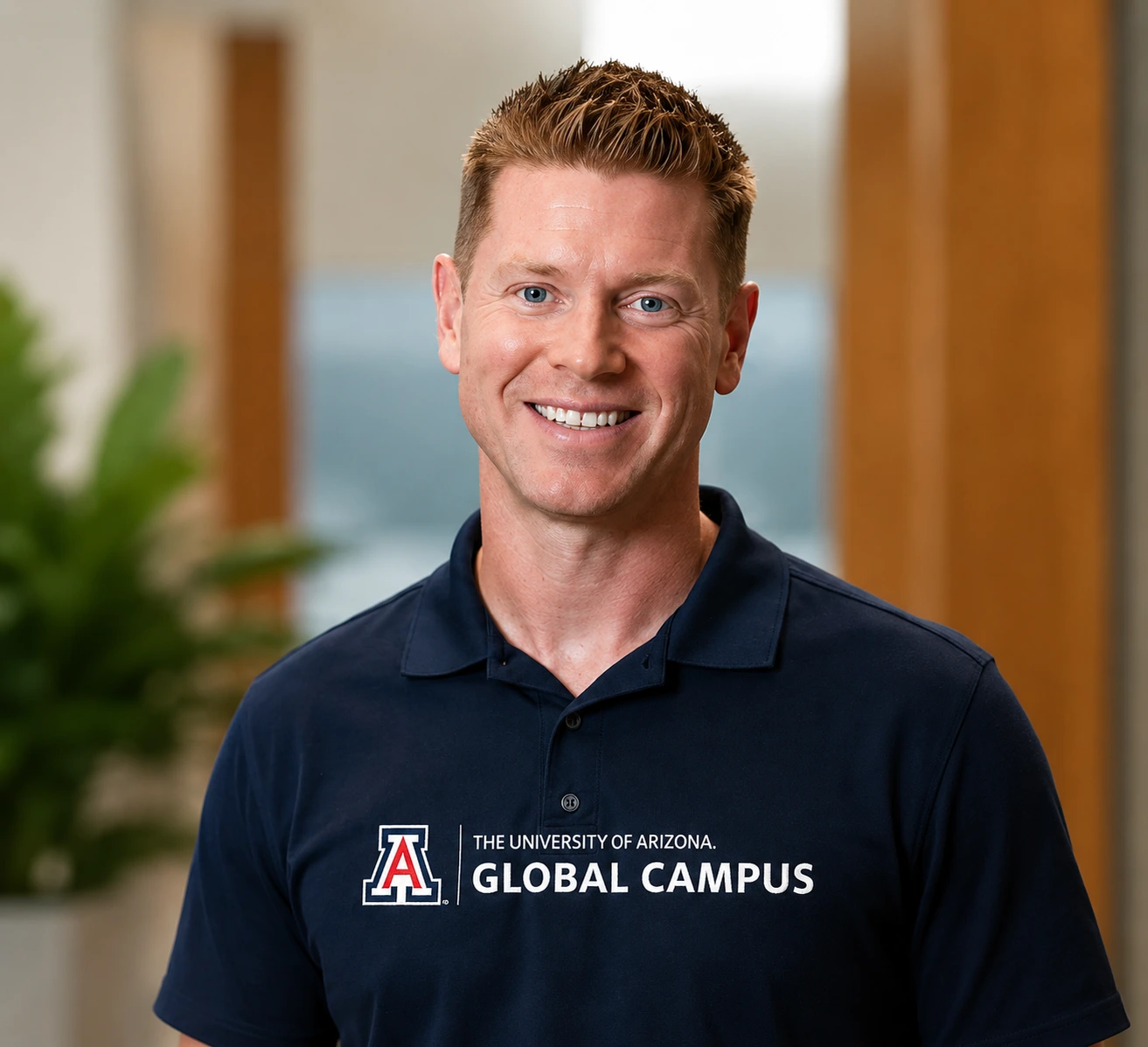
Key Takeaways
- Dr. Michelle Simecek is an assistant professor at the University of Arizona Global Campus (UAGC) College of Foundational Studies.
- She teaches early childhood education courses, many of which she helped design.
- Her story is one of empathy and leadership.
- Dr. Simecek’s early experiences, including an unexpected teaching role in Venezuela, shaped the way she teaches and leads.
- One of Dr. Simecek’s professional goals is to ease the load on UAGC faculty. She aims to be their trusted resource, providing what they need when they need it.
- She can relate to many UAGC students, many of whom are adult learners and military-connected individuals still pursuing higher education while juggling various responsibilities.
--
The First Class Matters: How Dr. Michelle Simecek Builds Connection and Confidence
If you ask Dr. Michelle Simecek to describe her mission in a single sentence, she answers without hesitation: “Making education accessible and rewarding for everyone involved.”
It is a philosophy that has guided her through nearly 25 years in education, from classrooms in high-poverty school districts to online learning at the University of Arizona Global Campus (UAGC), where today she serves working adults across the United States and worldwide.
Today, as an assistant professor in the Division of Foundational Studies at UAGC, Dr. Simecek supports students and faculty in GEN 102 and GEN 103, courses that often serve as a student’s first introduction to UAGC. Though she stepped into the role just a year ago after spending eight years in the College of Professional Advancement under early childhood education, the transition felt like a natural extension of the work she has always cared about most: helping educators succeed so students can thrive.
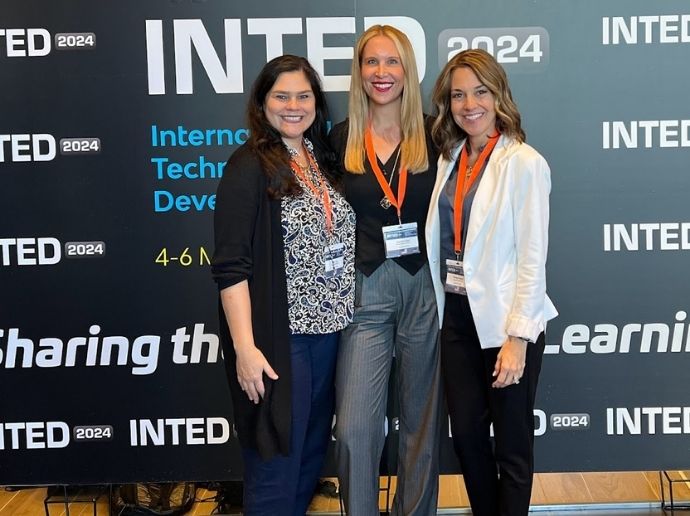
Student Engagement" at the INTED conference
in Valencia Spain, 2024.
“I’ve just always been really passionate about supporting our faculty members,” she says. “In the Gen Studies program, it’s critical that we have strong faculty and strong faculty support because it’s the student’s first experience with UAGC. These are the very first classes they take.”
Even in her most recent role, Dr. Simecek continues teaching early childhood education courses, many of which she helped design herself. Over the last two years alone, she has written nearly 10 courses for the UAGC early childhood education program.
Throughout her career as a university professor, reading specialist, literacy coach, instructional mentor, and curriculum developer, Dr. Simecek has remained deeply committed to fostering meaningful connections in education. Her work has taken her to national and international conferences, where she has shared insights on innovative virtual teaching practices, cultivating belonging in online classrooms, and supporting diverse learners as they begin their university journeys.
“It’s simple really,” she says. “Students are most successful when they feel safe, supported, and valued.”
An Unexpected Classroom in Venezuela
At age 17, shortly after graduating high school, Dr. Simecek participated in a foreign exchange program that took her to Venezuela. What began as a cultural experience quickly turned into an unexpected introduction to education when a local English teacher abruptly stopped coming to work.
“They pulled me in,” she recalls with a laugh. “At first, it was supposed to be temporary, and then weeks turned into months.”
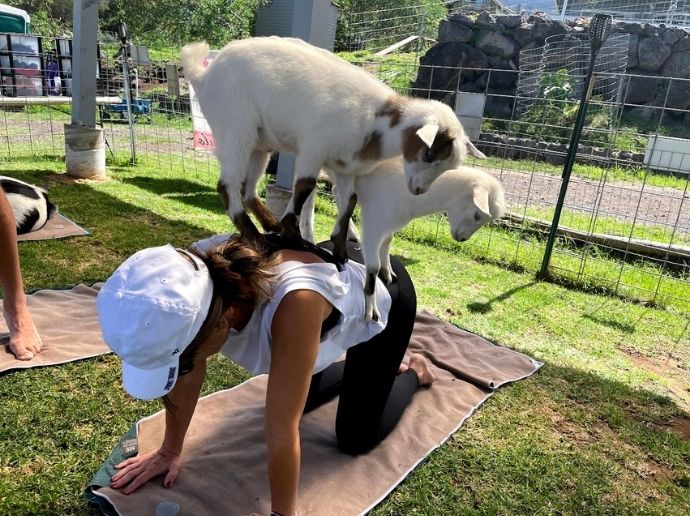
in Maui, Hawaii.
The experience opened her eyes not only to the realities of education systems across the world but also to the power teachers have in shaping a classroom community.
“The part I like about teaching is the community that you build,” she says. “You create that environment. You decide how students are welcomed every day, how the room feels, how families are treated, how you engage with the community. You impact lives.”
“The part I like about teaching is the community you build. You create that environment. You decide how students are welcomed every day, how the room feels, how families are treated, how you engage with the community. You impact lives.”
The memory stayed with her long after she returned home. She remembers being struck by the way children naturally trusted and admired their teachers and how important it was for schools to feel safe and encouraging.
“Children see the best in people,” she says. “They see the best in their teachers, and school should be a safe place for them.”
A Career Rooted in Advocacy
Dr. Simecek went on to earn a bachelor’s degree in Spanish and communications from the University of Wisconsin, a master’s degree in curriculum and instruction from the University of Colorado, and an EdD in educational leadership from Edgewood University in Wisconsin.
Her early teaching career placed her in some of Denver’s most underserved schools before she later moved to the Midwest, where she spent much of her career working in high-poverty, high-need rural districts.
“I’ve spent most of my career in schools where students were facing real barriers outside the classroom,” she says, “and that changes the way you think about teaching and support.”
Those experiences shaped her understanding of education not simply as academic instruction but as a form of advocacy and support for entire families. As a reading specialist and district leader, she often worked with students who needed intervention before entering special education services, helping families identify challenges and find pathways forward.
“Education is so foundational,” she says. “It’s not just supporting the students. It’s supporting their parents, too, who may not even realize their child is struggling yet. You’re part of that early process of figuring out what’s going on and how to help.”
Putting the Backpack Back On
Years later, when her own children were growing up, Dr. Simecek began imagining herself in higher education. At the time, she was teaching full time while also working part time as a teaching assistant, while balancing family life with a husband whose career as an airline pilot often kept him away from home.
She knew earning a doctorate would open doors to the type of faculty preparation and leadership work she wanted to pursue, but the timing felt daunting.
“The only way I can explain it is like somebody throwing a really heavy backpack of rocks on your back,” she says. “You still have your life and everything else, and then you have this huge weight of the program you’re trying to get through.”

touring the Game of Thrones Wall in
Croatia.
She had originally believed her master’s degree would be enough. Instead, she chose to “put the backpack back on” and pursue her doctorate anyway.
There were moments when the balancing act felt nearly impossible. During one meeting with program faculty, she was asked why her dissertation progress had slowed. She laid out the exhausting reality of balancing a career, a husband with a demanding schedule, and two active children. “I honestly don’t know when I’m supposed to find the time,” she told them.
She realized it was time for a new approach.
Determined to finish, Dr. Simecek and her husband created a system. She blocked dedicated dissertation hours into Google Calendar and hung a sign outside her study space to signal uninterrupted work time. Out of 27 students in her doctoral cohort, she was one of six who graduated on schedule.
“It’s simple, really; students are most successful when they feel safe, supported, and valued.”
She vividly recalls defending her dissertation at the University.
“I walked into the room, and all the professors were sitting around the table,” she says. “My husband was there, too, which nobody told me ahead of time.”
The surprise nearly threw her off balance.
“He was crying. I was crying,” she recalls. “It was a really big goal to accomplish.”
Not long afterward, the opportunity at UAGC opened up. She applied, interviewed, and got the position that would allow her to merge her passion for teaching, mentorship, and faculty development.
Supporting Faculty Behind the Screens
Today, Dr. Simecek spends much of her time conducting faculty reviews, evaluating online classrooms, and helping instructors strengthen their teaching practices. Because many associate faculty members work remotely and part time, she sees her role as mentor and connector — someone who helps faculty feel less isolated in the online environment.
“When you’re a classroom teacher, you can walk down the hallway and pop into someone else’s room to get ideas,” she says. “Our faculty don’t have that option. They only see their own online classroom.”
One of her favorite parts of the job is sharing examples of effective teaching practices across courses and watching instructors build on those ideas.
“You see the light bulb go off,” she says. “Then it’s really fun to evaluate them the next year and see how they implemented those ideas.”

mother at the United States Air Force Academy
parents' weekend.
Her approach to faculty mentorship and student support centers on trust. She believes learners perform best when they know mistakes are part of growth and when they feel supported instead of judged.
“If you don’t trust me and don’t think I’m here to support you, you’re not going to be able to learn,” she says. “You have to feel safe. It has to be okay to make mistakes and work together to improve.”
That mindset also shapes how she prepares students for future coursework. In foundational studies courses, she often sees herself helping students transition into the expectations of higher education while gradually building confidence and independence.
“I kind of hold your hand,” she says, “but then gradually pull it away so you’re ready for whatever comes next.”
Building Spaces Where Students Feel Supported
For Dr. Simecek, the work has never been only about curriculum, policies, or assignments. Whether she is supporting faculty members navigating busy professional lives or encouraging first-generation college students balancing school, work, and family responsibilities, the goal remains the same: creating environments where people feel capable of succeeding.
“They should be able to log into the classroom and feel like they have support,” she says.
Throughout every role she has held, from an impromptu teenage substitute teacher in Venezuela to a faculty mentor at UAGC, connection has remained at the center of everything she does.
Find the right program for you — explore online degrees and talk with an advisor today.
Rapid-Fire Questions with Dr. Simecek
Q: UAGC: What is your favorite way to spend a free day?
A: Dr. Simecek: Honestly, my perfect free day starts slowly with coffee. I need about an hour to wake up and enjoy the morning first. After that, I love doing something active — usually pickleball or a hike if the weather’s nice. Then I’ll head to Pilates or yoga because I love the combination of movement and stretching. It feels like a reset for my brain. Once I’ve done that, I feel like I can accomplish anything the rest of the day. I tackle home projects or errands or spend time with friends. And then end the night with a movie or show on the couch with my puppy and husband.
Q: UAGC: What are you reading right now, or what is one book you would recommend?
A: Dr. Simecek: “Remarkably Bright Creatures” is probably my all-time favorite book. They recently made it into a Netflix movie, which I still need to watch, but I always tell people to read the book first. I absolutely loved it. My husband would walk into the room while I was reading and ask why I was smiling all the time. It’s just one of those books that stays with you.
Q: UAGC: Who would be your dream dinner guest, alive or deceased?
A: Dr. Simecek: Tom Hanks. I can’t fully explain why — I just love him.
Q: UAGC: What is one thing on your bucket list?
A: Dr. Simecek: Travel is always at the top of my list. My husband and I travel quite a bit already, but I would love to take a full month to explore Australia and New Zealand and really unplug for a while.
Q: UAGC: What is the most important skill someone can learn, and why?
A: Dr. Simecek: Listening. I think people underestimate how much you can learn when you stop trying to fill every silence. I’ve learned as I get older to sit back, observe and listen first, take notes, and think before speaking. Everybody has a story, and if you slow down long enough to really hear people, it changes the way you understand them. It helps you approach others with more patience, empathy, and curiosity instead of frustration or assumptions.
Q: UAGC: If you weren’t working in higher education, what would you be doing?
A: Dr. Simecek: I’d definitely still be in K-12 education. Before this opportunity came along, I was actually considering a principal position at an elementary school. So, I’d probably be leading an elementary school somewhere.