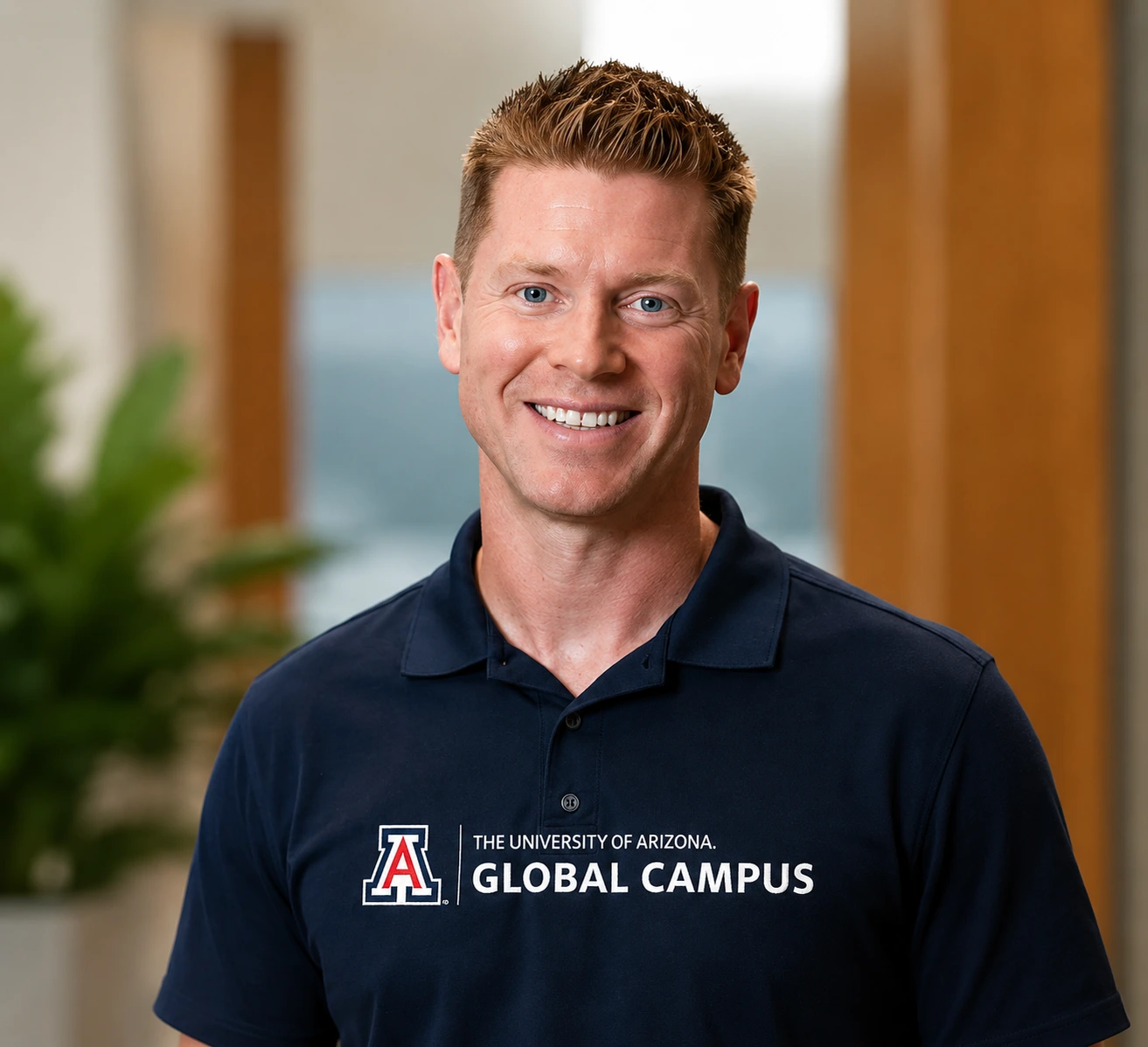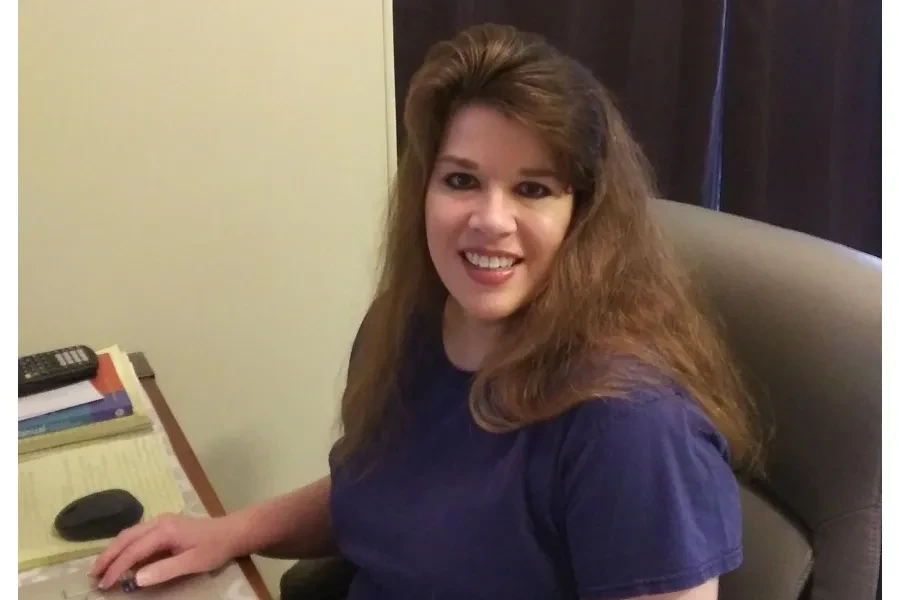

What happens when a historian, filmmaker, and behavior analyst gather around the dinner table?
For Dr. Kimberly Luke, it is just your everyday mealtime. Yet, there is nothing ordinary about the conversation.
“I always tell people my family has the coolest careers,” Luke says. “My mom’s in psychology, my brother’s in filmmaking, and there’s always something interesting to talk about.”
From her home in Colorado, where she teaches history for the University of Arizona Global Campus (UAGC), Dr. Luke is surrounded by storytellers. Her office, lined with books and archival notes, sits just down the hall from her brother’s editing space. Even downtime feels collaborative: horror movies, prestige television, and long conversations that stretch late into the evening.
Whether dissecting film plots or debating psychology theories, the constant is curiosity. It always has been.
Where the Teaching Began
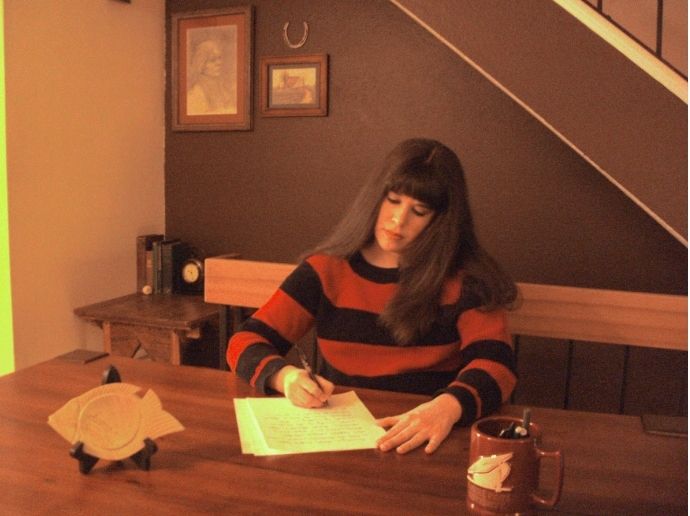 Long before she earned a doctorate, Dr. Luke was lining up dolls in neat rows, chalkboard propped nearby, reenacting lessons she had memorized from school. Growing up in a single-parent household, she played teacher before she fully understood what that would require.
“I loved breaking things down and explaining them,” she recalls.
Her classmates noticed. If a lesson did not quite click, Dr. Luke often found herself reteaching it at recess or after class. Teaching was not so much a decision as it was instinct.
History came later, and she can trace it to one high school classroom: Wayne Cato’s World History course.
“He made history come alive,” she explains. “It felt like he knew the backstory of every person who had ever lived.”
Cato did not lecture from a textbook. He told stories. Kings and revolutions were not abstract concepts; they were human dramas. Dr. Luke sat mesmerized in his classroom, then went home and recited entire lectures to her family.
Her mother, who worked at a learning center for adults and children with developmental disabilities, often brought Dr. Luke along during the summers. There, she helped prepare lessons and observed the transformative power of education up close.
“That’s when I realized it wasn’t just that I loved education,” she says. “My calling was somewhere between the lesson plans.”
Still, when it came time for college, practicality intervened. Stability mattered in her household. Financial security was never assumed. Dr. Luke initially chose finance. It felt practical. Responsible.
It took one Accounting 101 class to know it wasn’t the right fit.
“I couldn’t imagine planning my life around it,” she says.
After prayer and reflection, the decision became clear.
“There was no backup plan anymore. It was history or nothing,” she says.
The Lives Preserved in Ink
At Florida State University, where she earned her doctorate, Dr. Luke worked at the Institute on World War II and the Human Experience. There, history was not so distant. It was handwritten.
She read letters from soldiers in training and diaries from young girls documenting daily life under occupation. The pages were worn and brittle, but the voices were immediate.
In one letter, an airman described being invited to a Southern meal by a classmate. He wrote about unfamiliar food and the kindness of gestures.
“I remember thinking, ‘I really like this guy,’” Dr. Luke says.
On the next page, the tone shifted.
The story stopped. The airman had died in a training accident.
“There was no backup plan anymore. It was history or nothing."
“It took the wind out of me,” she recalls. “I felt like I knew him — even though he died before I was born.”
In another archive, Dr. Luke read the diary of a 10-year-old girl living in the Philippines during the Japanese occupation in World War II. At first, the entries reflected ordinary childhood concerns. Gradually, hunger dominated the pages. The girl wrote about her younger brother breaking his arm while malnourished.
“You could feel the shift as hunger seeped into every line,” Dr. Luke explains. “My heart broke for that little girl and her family.”
Over time, Dr. Luke began to describe the people she researched as extended family.
“I adopt them,” she acknowledges. “If I’m spending that much time with their stories, they become part of me.”
No Back Row
Dr. Luke often thinks back to Cato’s classroom and the power of narrative.
“I always said he told history like a story,” she says. “The best compliment I’ve ever received is when a student tells me I do the same.”
Stories, she believes, are connective tissue. They allow people to see through someone else’s perspective and recognize shared human experiences.
One of her earliest teaching moments reinforced that belief. As a graduate instructor at Florida State, Dr. Luke taught a Middle Eastern civilization course. After reading a story set in a small Iranian village, a student approached her. His grandfather was from Iran.
For the first time, he felt he understood his grandfather’s experiences — and could talk with him about them.
“That’s what history can do,” Dr. Luke says. “It opens doors between people.”
Dr. Luke joined UAGC in 2013 as associate faculty and later moved into a full-time role. She now teaches adult learners across the country — many balancing careers, military service, and family responsibilities.
“I love teaching adult learners,” she says. “They bring so much to the classroom.”
Military students stationed in the Middle East add lived experience to discussions. Parents juggling multiple responsibilities model resilience. Professionals with decades of expertise challenge assumptions, including her own.
“There are times I read introductions and think, ‘What can I possibly add to this person’s experience?’” she explains. “But that’s the beauty of it. We learn from each other.”
Online learning, she says, levels the field. In a traditional lecture hall, some students could disappear into the back row. In the online classroom, every voice participates.
“There’s no back row,” Luke says.
She once worried that teaching online would limit connection. Instead, she found the opposite.
“I actually know my students better,” she says. “You see their thoughts in writing. You engage with each one.”
Her philosophy is simple: ask questions. If she does not know the answer, she will find it.
“It’s OK to stumble,” she notes. “Not every idea hits it out of the park. But you get better.”
A Living Inheritance
Dr. Luke does not expect every student to fall in love with history. What she hopes they gain is something deeper: the ability to question assumptions, to listen to opposing viewpoints, and to recognize perspective.
“If they’re willing to hear other viewpoints, that will help them no matter what they do,” she says. “For me, that’s success.”
There was no singular moment when Dr. Luke decided to become a teacher. It was always there: in the dolls lined up in childhood, in the lectures recited at the dinner table, in the letters carefully unfolded in an archive.
Every day, she is grateful she followed that path.
Because for Dr. Luke, history is not just about the past. It is about keeping people alive through their stories and passing that stewardship on to the next generation.
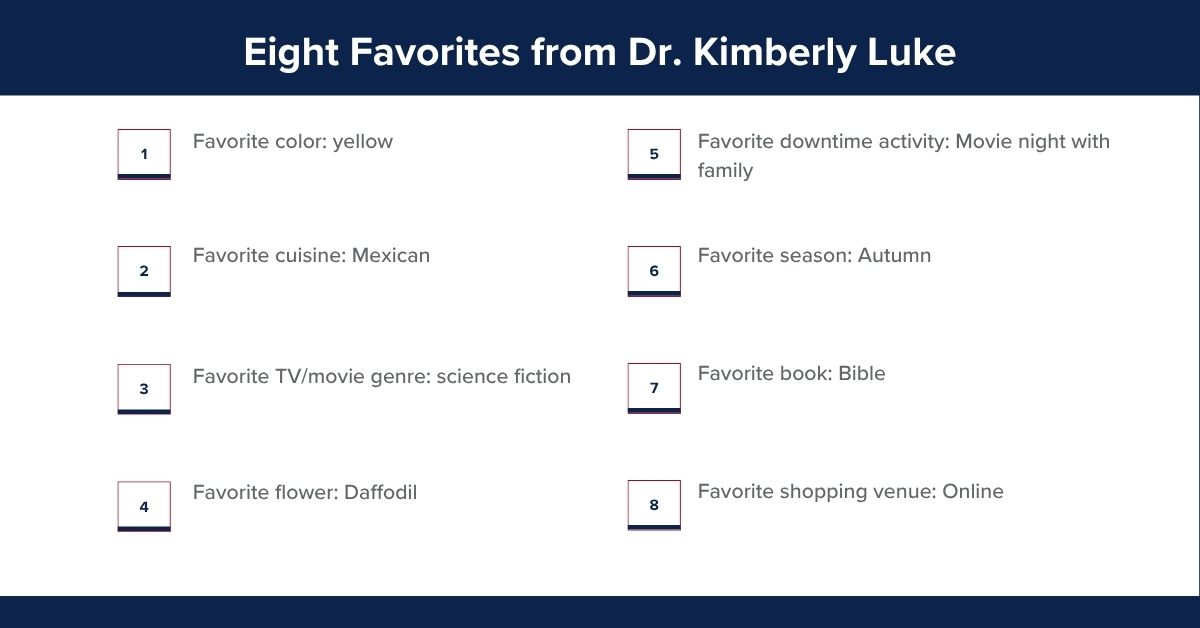
Getting to Know Dr. Luke
UAGC: If my teaching style had a headline, it would read…
Dr. Luke: Enthusiastic History Lover: Witness one professor’s passion for the craft
UAGC: What are three words students would use to describe your class?
Dr. Luke: I hope they would say flexible, eye-opening, and engaging.
Flexibility is important to me. In end-of-course surveys, students often mention that I try to work with them through whatever they are balancing in their lives. That means a lot.
I also hope they find the class eye-opening. I want them to see history from a new perspective or discover a new interest. It does not have to be the same topics I am passionate about. If they walk away with something that resonates with them personally, that is what matters most.
UAGC: What is one history myth you love debunking?
Dr. Luke: One of the biggest misconceptions is that history follows neat, overarching theories that explain everything. I never learned history that way, and I do not teach it that way.
When I was studying Egypt, I read writings from early 20th-century British advisers in the Egyptian government. Through their work, you see how they described Egyptians as “natives.” At one point, my advisor reminded me how loaded that term was, how it reduced people and carried negative connotations.
That experience reinforced how much perspective shapes the way we interpret events. People see the same situation differently based on their background, culture, and experiences. If students leave my class understanding that history is shaped by perspective, and that empathy and critical thinking matter, they will thrive in any career path.
UAGC: What historical figure would you invite to dinner?
Dr. Luke: Jesus. I would simply love to have a conversation.
UAGC: What is your favorite part of teaching adult learners?
Dr. Luke: It is the knowledge they bring with them.
Adult learners have such varied life experiences, many that I do not have, and that makes classroom discussions richer. I do not have to carry the entire conversation, and that is a good thing. I do not know everything.
They bring so much insight into the classroom that I genuinely feel I gain as much from them as they gain from me. That exchange is what I love most about teaching adults.
UAGC: Finish this sentence: Access to education is …
Dr. Luke: Power.
Education opens doors. My family has relied on food stamps. I have gone to food banks. I understand what it means to struggle.
For my family, education was a way out. It was also a path toward doing work we genuinely loved and felt proud of. Many people work jobs they do not enjoy because they must. Education creates the opportunity to explore something that sparks creativity and purpose.
UAGC: Teaching matters to me because …
Dr. Luke: It is my opportunity to create ripples.
When I think about adult learners, especially single parents balancing school, work, and family, I am reminded how difficult their journeys can be. Their hard work impacts not just their own lives, but their children’s lives and future generations.
Being even a small part of that ripple effect is incredibly powerful. It is humbling, and it is why teaching matters so much to me.