Pursuing a degree in the social sciences opens far more doors than many people may realize. Rooted in understanding people, communities, systems, and data, a social science degree equips graduates with adaptable skills employers across industries increasingly rely on — especially in a world where informed decisions, equitable policies, and human-centered solutions matter more than ever. If you find yourself asking, “What can I do with a social science degree?” you’ve come to the right place.
In this 2026 social science career guide, we explore some of the most impactful and exciting paths you can pursue with a background in social science. Whether you’re drawn to shaping public policy, researching consumer behavior, strengthening communities, improving programs, supporting workplace culture, or leading mission-driven organizations, there’s a meaningful role waiting for you.
Below, we break down what you can do with a social science degree through four in-demand career pathways — Policy Analyst, Market Researcher, Human Resources Specialist, and Nonprofit Manager — so you can better understand where your skills fit and how to take the next step.
What Is Social Science?
Social science refers to the scientific study of human society, behavior, and the relationships between individuals and institutions. According to COSSA (the Consortium of Social Science Associations), it includes disciplines like anthropology, economics, political science, psychology, sociology, history, geography, and many others. These fields explore why people act the way they do — both individually and in groups — and how social systems function.
At its core, social science is about understanding how human beings organize their lives, make decisions, and build institutions. As the Academy of Social Sciences (UK) explains, social scientists examine “how people organise and govern themselves … how wealth is generated … how business works … and issues such as inequality, crime, and climate change.”
Social science also brings rigor: it often applies both quantitative and qualitative research methods — surveys, experiments, statistical modeling, interviews — to study social phenomena. COSSA emphasizes that this research doesn’t just generate knowledge: it gives policy makers, community leaders, and organizations the data-based insights they need to support better programs, make more informed decisions, and address critical societal challenges.
In short, a social science degree doesn’t just teach you about society — it teaches you to analyze it, understand the forces that shape it, and contribute to meaningful change.

What Skills Do You Gain from a Social Science Degree?
A social science degree doesn’t just teach theory — it helps you build a versatile skillset that’s highly valued across industries. Here are some of the core skills you typically gain, and why they matter:
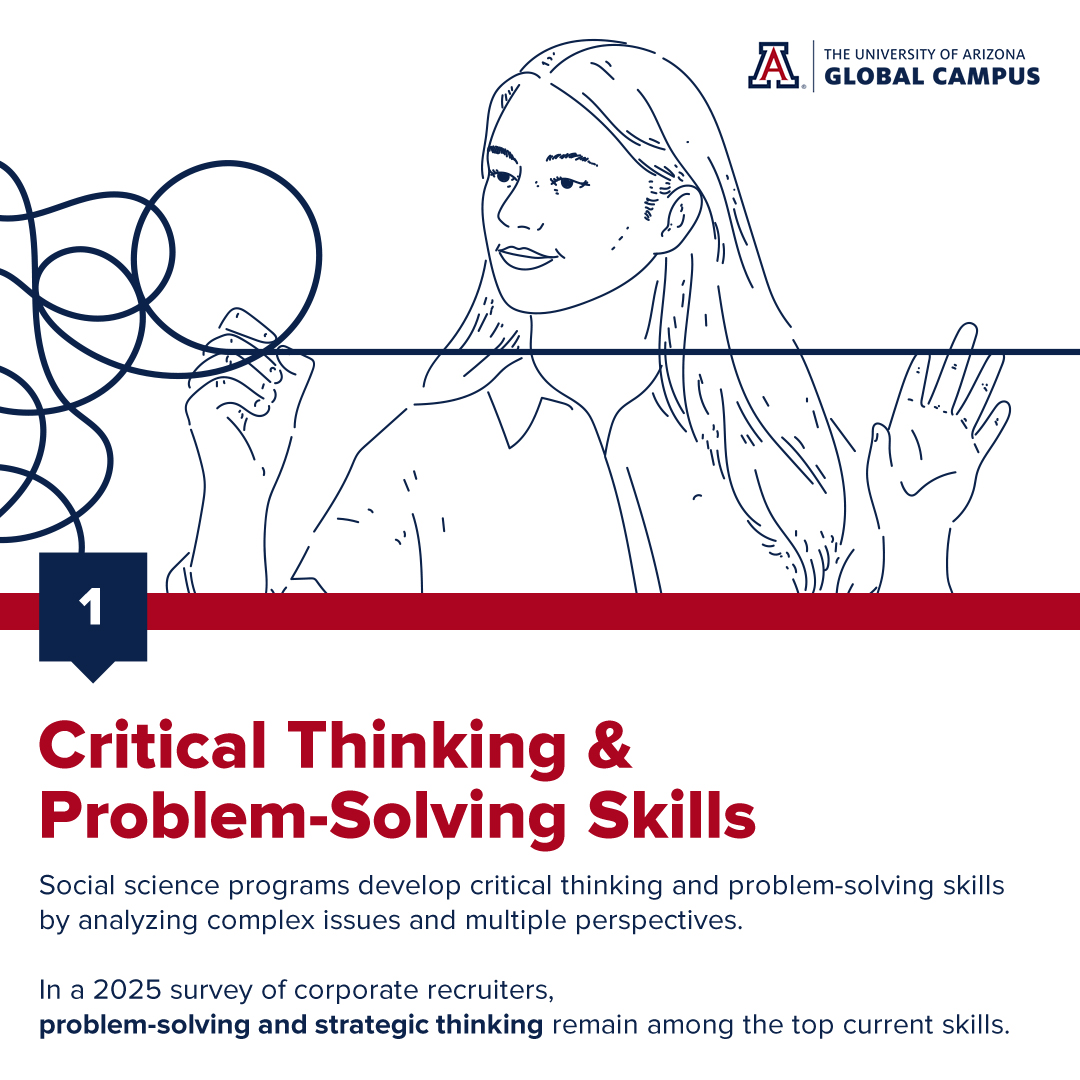
- Critical thinking and problem-solving: Social science programs emphasize analyzing complex social issues, weighing different viewpoints, and developing well-reasoned arguments. This cultivates strong critical thinking and the ability to solve multifaceted problems — exactly the kind of higher-order thinking many employers seek. In a 2025 survey of corporate recruiters, problem-solving and strategic thinking remain among the top current skills.
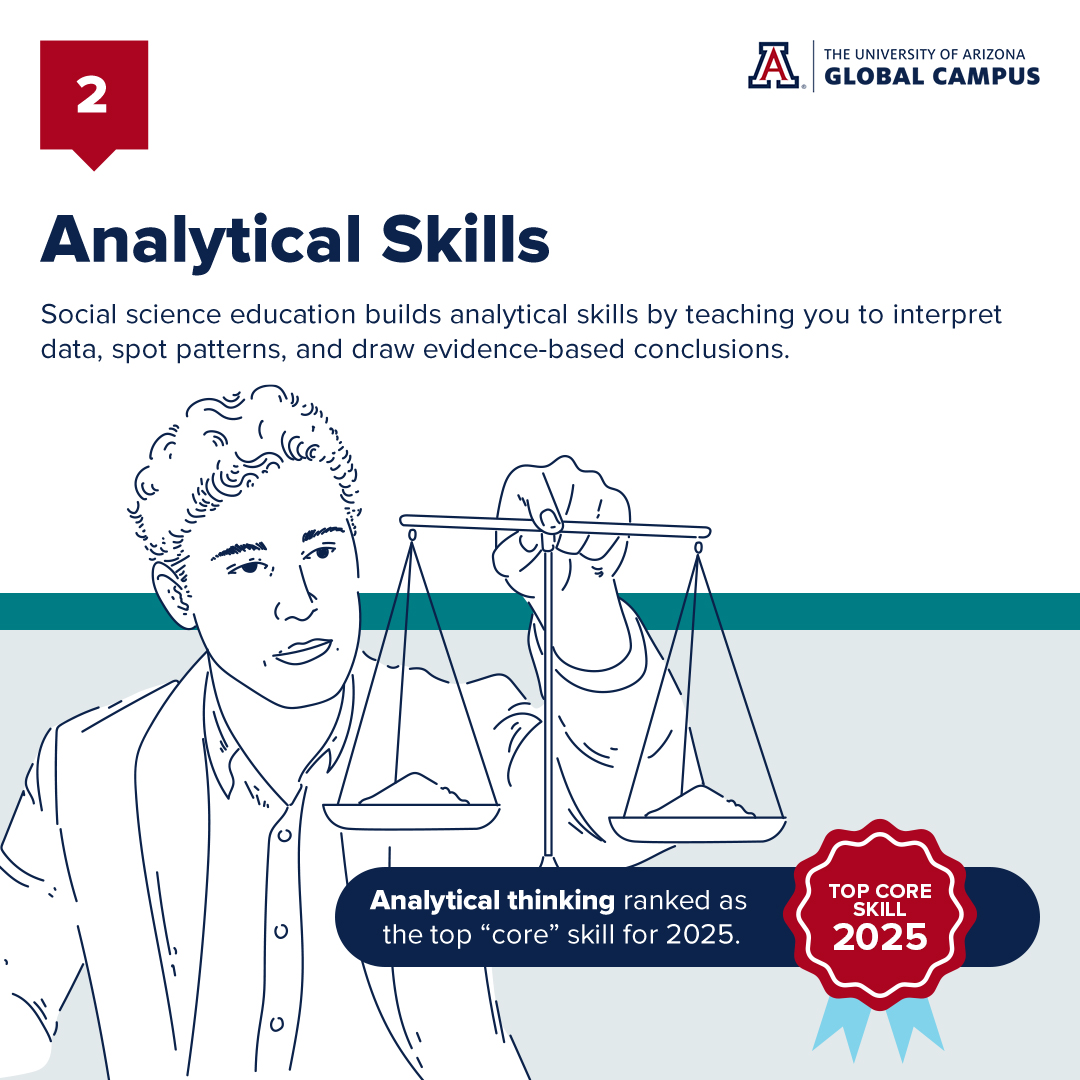
- Analytical skills: Whether you’re running a survey, interpreting data, or evaluating policy impacts, you learn how to break down large amounts of information, identify patterns, and draw evidence-based conclusions. As noted in employment-focused research Why Social Sciences, social science education helps build “analytical skills … associated with innovation and adaptability.” The World Economic Forum ranks analytical thinking as the top “core” skill for 2025. According to the U.S. Bureau of Labor Statistics, jobs requiring a bachelor’s degree show significantly higher “critical and analytical thinking” scores than jobs requiring less formal education.
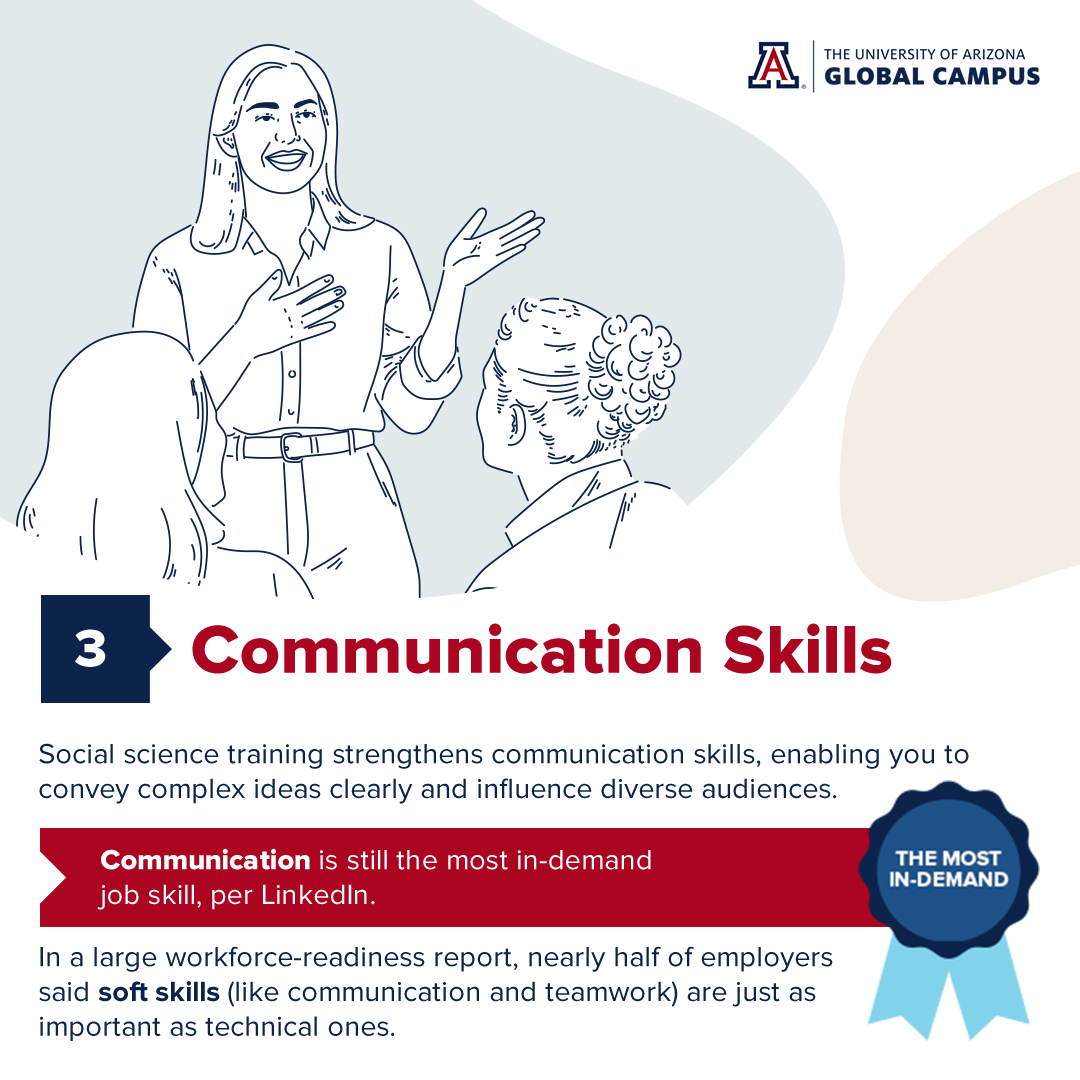
- Communication: Social scientists often work with written reports, presentations, interviews, and public speaking. These experiences sharpen your ability to explain complex ideas clearly, tailor your message for different audiences, and influence stakeholders — critical in roles like policy analysis or nonprofit management. According to LinkedIn data, communication is still the most in-demand job skill. In a large workforce-readiness report, nearly half of employers said soft skills (like communication and teamwork) are just as important as technical ones.
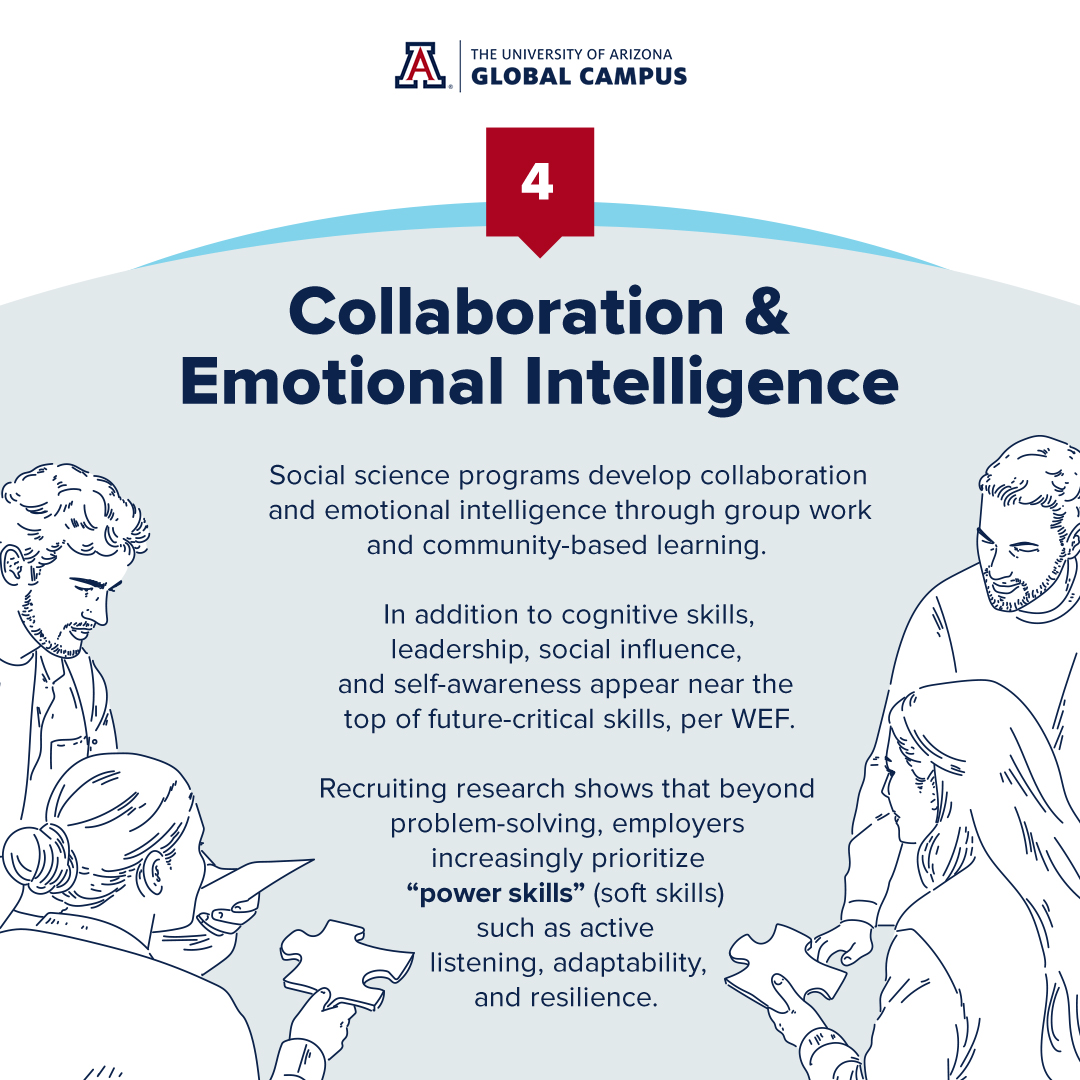
- Collaboration and emotional intelligence: Many social science programs involve group projects, community-based learning, or fieldwork, which helps build teamwork, empathy, and self-management. According to a report, social and emotional intelligence (like teamwork, integrity, and self-management) is among the top competencies employers value. In addition to cognitive skills, leadership, social influence, and self-awareness appear near the top of future-critical skills, per the World Economic Forum. Recruiting research shows that beyond problem-solving, employers increasingly prioritize “power skills” (soft skills) such as active listening, adaptability, and resilience.
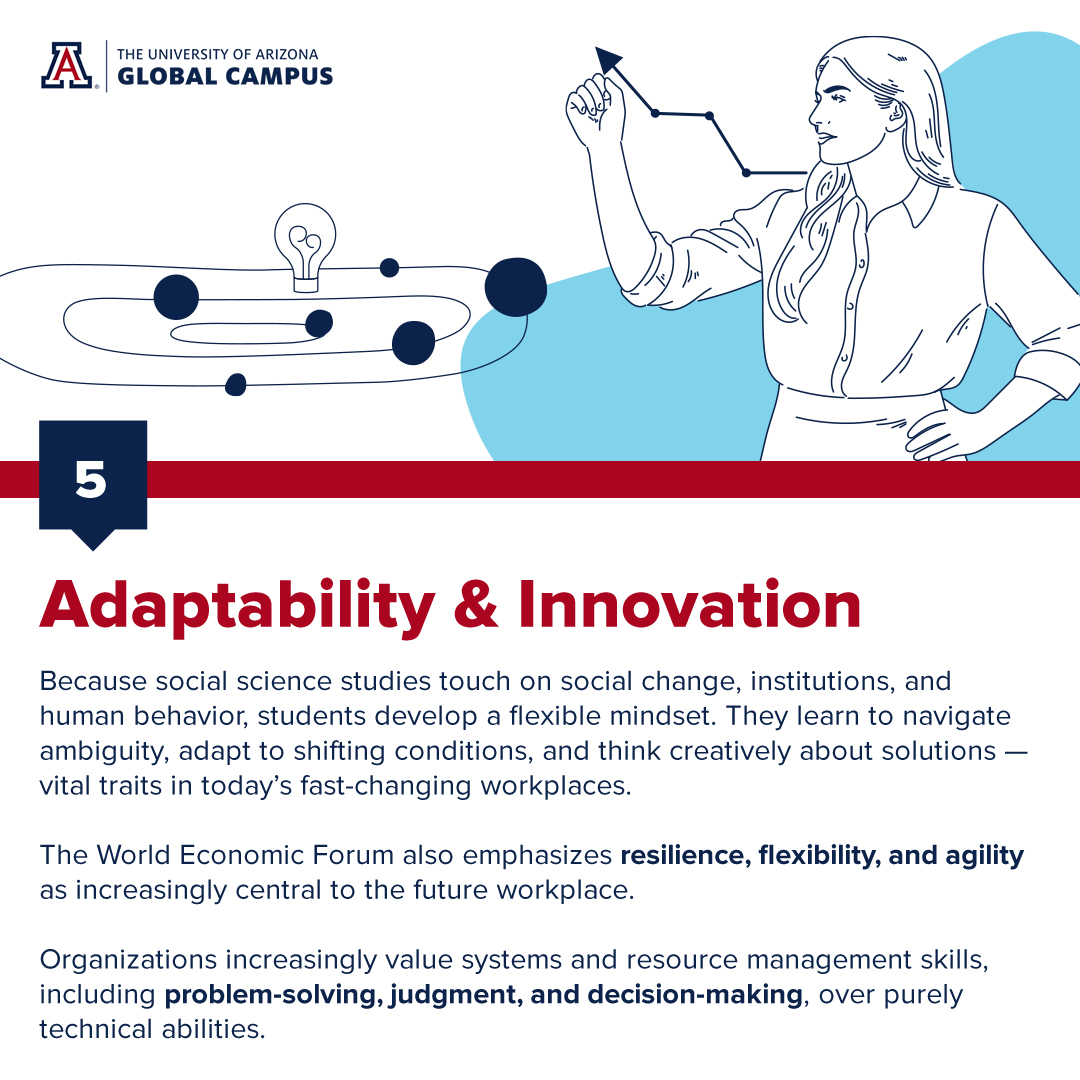
- Adaptability and innovation: Because social science studies touch on social change, institutions, and human behavior, students develop a flexible mindset. They learn to navigate ambiguity, adapt to shifting conditions, and think creatively about solutions — vital traits in today’s fast-changing workplaces. The WEF also emphasizes resilience, flexibility, and agility as increasingly central to the future workplace. HR-industry research from the Society for Human Resource Management (SHRM) finds that many organizations are placing greater value on “systems and resource management” skills — including complex problem-solving, judgment, and decision-making — over purely technical skills.
- Research skills: Social science training often includes both quantitative (e.g., statistics, survey analysis) and qualitative (e.g., interviews, case studies) research methods. This gives you the tools to design studies, collect data, analyze results, and translate findings into actionable insights — a major plus for careers in policy, evaluation, market research, and more. The GMAC Corporate Recruiters Survey (2025) identifies data analysis/interpretation as a top future skill. The same report points to strategic thinking and problem-solving as consistent priorities across different industries.
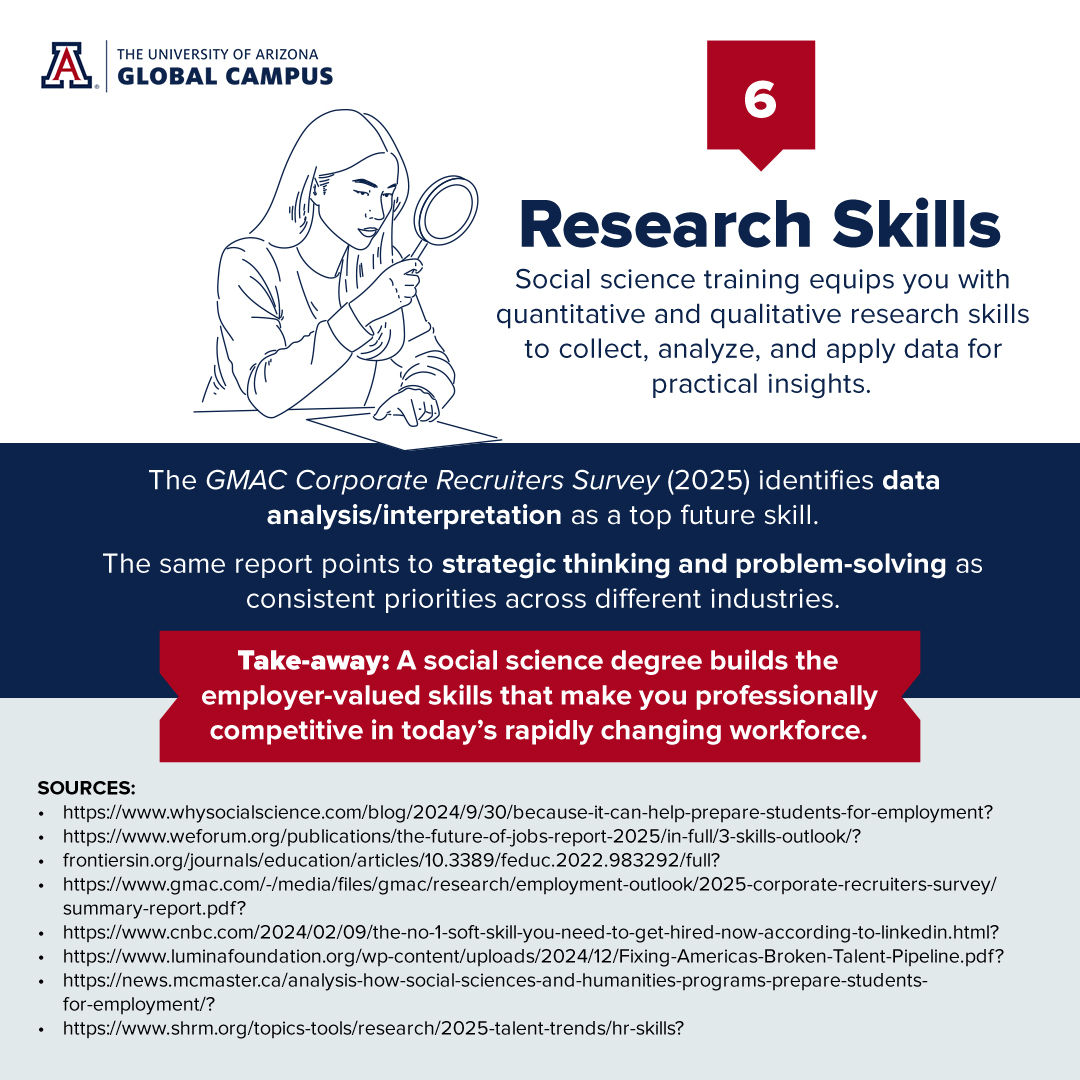
The take-away: The skills you hone in a social science degree program — like critical thinking, research, collaboration, adaptability, and communication — are precisely the kinds of competencies that current labor-market data shows employers prize. Your social science degree isn’t just academically rigorous — it’s professionally strategic in today’s rapidly shifting workforce.
What Are Some Potential Jobs with a Degree in Social Science?
With these professional skills in hand, you’ll be prepared to take on a variety of roles in a number of diverse industries. Let’s explore exactly what you can do with a social science degree.
- Managers: Managers operate at multiple levels within an organization, and their responsibilities can vary widely. In some roles, they lead teams and guide people; in others, they oversee projects, processes, or key tasks. Because “manager” can encompass many forms of oversight and coordination, it’s important to understand the broad scope of what management involves — whether you're preparing for an interview or simply exploring what a managerial role looks like.
Education: Most management roles prefer candidates with at least a bachelor’s degree, along with some level of on-the-job training to build practical experience. In addition to formal education, developing core skills like critical thinking, communication, collaboration, analytical ability, and adaptability can help prepare you for the wide-ranging responsibilities managers take on. This combination of education, hands-on learning, and essential workplace skills provides a strong foundation for stepping into a managerial position.
Salary: Earning potential for managers can vary widely depending on factors such as industry, organizational size, level of responsibility, and years of experience. The average salaries in this field generally range from about $67,370 to $225,120, reflecting the diverse scope of management roles and the many variables that influence compensation. This broad range highlights how managerial earnings often grow with increased expertise, leadership responsibilities, and opportunities within specific sectors.
Employment Outlook: Job growth for managers is projected to be about 5–6%, reflecting steady demand across a wide range of organizations and industries. This moderate growth rate suggests that management roles will continue to be needed as companies evolve, teams expand, and operational complexity increases. As always, actual opportunities can vary depending on factors like sector trends, regional needs, and organizational priorities.
- Regulatory Affairs Managers: Regulatory Affairs Managers, per O*NET OnLine, “plan, direct, or coordinate … activities of an organization to ensure compliance with regulations and standard operating procedures.” Their work includes developing regulatory strategies, preparing and submitting documentation to regulatory agencies, handling inspections or audits, responding to agency concerns, and staying current on regulatory changes.
Education: According to O*NET, most regulatory affairs managers hold at least a bachelor’s degree, while some pursue master’s degrees to deepen their expertise. Beyond formal education, experience in regulatory processes, quality assurance, or a related industry is highly valued. O*NET places this role in Job Zone 4 (“Considerable Preparation Needed”), meaning that a combination of education, relevant work experience, and on-the-job training is typically required to be successful.
In addition to formal qualifications, several key skills are essential for excelling in this role. Regulatory affairs managers need strong attention to detail to review complex documentation and ensure compliance. Analytical and critical thinking skills help them interpret regulations and anticipate how changes may impact products or procedures. They must also have excellent communication and interpersonal skills, as the role involves coordinating with internal teams, external regulatory agencies, and other stakeholders. Project management and organization skills are critical for keeping multiple submissions, deadlines, and compliance requirements on track. A combination of technical knowledge, regulatory expertise, and strong soft skills makes a Regulatory Affairs Manager effective at both guiding teams and keeping products legally and safely on the market.
Salary: Salary information for regulatory affairs managers can vary widely depending on the industry, company size, location, and level of experience, and publicly available data is limited. While some sources may provide estimates or ranges, there is no single authoritative figure that captures the full scope of potential earnings for this role. As a result, specific salary details are often difficult to pinpoint, and prospective candidates are encouraged to research multiple sources or consult industry reports to get a sense of compensation trends.
Employment Outlook: According to data from O*NET, regulatory affairs managers are projected to grow 5–6% in employment between 2024 and 2034, which is considered faster than average. This suggests a moderate increase in demand over the decade, though growth may vary depending on industry, regulation changes, and organizational needs.
- Compliance Managers: According to O*NET, a compliance manager plans, directs, or coordinates organizational activities to make sure the company meets ethical or regulatory standards. Their duties can include reporting violations to enforcement agencies, investigating compliance issues, training employees on policies, maintaining documentation, and running internal audits. In short, they act as a bridge between regulatory requirements and business operations, helping the organization stay lawful, ethical, and accountable.
Education: O*NET places compliance managers in Job Zone 4 (“Considerable Preparation Needed”), meaning most roles require several years of relevant experience plus on the‑thejob training. In terms of formal education, about 63% of incumbents report needing a bachelor’s degree, while 14% indicate a master’s degree is required job training. In terms of formal education, about 63% of incumbents report needing a bachelor’s degree, while 14% indicate a master’s degree is required‑job training. In terms of formal education, about 63% of incumbents report needing a bachelor’s degree, while 14% indicate a master’s degree is required. Fields often include business, legal studies, environmental science, or risk management. This blend of education and hands-on experience helps compliance managers navigate complex regulations and coordinate compliance programs across different departments.
Salary: Salary information for compliance managers can vary depending on factors such as industry, company size, location, and level of experience. Actual salaries may differ based on individual circumstances and organizational factors.
Employment Outlook: O*NET classifies Compliance Managers as a Bright Outlook occupation, which means it's expected to grow faster than average. Specifically, projected employment is expected to increase 5–6% from 2024 to 2034. This suggests a moderate but solid increase in demand, likely driven by continuing regulatory complexity and organizational risk management needs.
- Loss Prevention Manager: A loss prevention manager, according to O*NET, is responsible for planning and directing policies, procedures, or systems to prevent the loss of a company’s assets. They assess risk exposure or potential liability and develop control measures to protect inventory and minimize financial losses. Their work often involves supervising investigations into internal theft, coordinating audits, working with law enforcement, and overseeing physical security systems.
Education: O*NET places Loss Prevention Managers in Job Zone 4 (“Considerable Preparation Needed”), meaning many jobs in this role require a four year‑year bachelor’s degree and significant relevant experience. While over half of incumbents (55%) report needing a bachelor’s degree, some roles may require less formal education. In addition to education, several years of prior work experience and on-the-job training are typically necessary.
Salary: Salary for loss prevention managers can vary depending on factors like company size, location, and the scale of operations.
Employment Outlook: O*NET classifies Loss Prevention Managers as a Bright Outlook occupation, projecting 5–6% growth between 2024 and 2034. This suggests a fairly solid increase in demand for these roles, likely driven by ongoing risks related to theft, fraud, and asset protection in retail and other sectors.
Conclusion: What Can You Do with a Social Science Degree?
A social science degree provides a versatile foundation for a wide variety of careers. Graduates can pursue roles in social services, research, public policy, community development, human resources, education, and other fields that rely on understanding human behavior, society, and organizational systems. The degree equips students with critical thinking, communication, and analytical skills, which are highly valued across nonprofit, government, and corporate sectors. With experience, on-the-job training, or additional certifications, social science graduates can move into leadership positions, guide organizational decision-making, and help shape policies or programs. Ultimately, a social science degree opens doors to meaningful work that allows graduates to make a tangible impact while offering opportunities for professional growth and career advancement in multiple sectors.
Bureau of Labor Statistics data regarding salary ranges and job growth projections are national in nature and do not guarantee employment, any specific salary, or job growth. Also, national long-term projections may not reflect local and/or short-term economic or job conditions. UAGC does not guarantee employment placement, any specific salary from employment, or career advancement.