As a higher education professional, my career spans over 17 years, and I have worked in many roles, including corporate trainer, adjunct faculty, faculty, department chair, and assistant dean. In addition, for 13 years, I have been the primary liaison between our institution and its business programmatic accreditor. As the liaison, I have led new program accreditations for over eight programs and successfully led the planning of two reaffirmations of accreditation for more than 20 business academic programs at the University of Arizona Global Campus (UAGC). I have also served as a business programmatic accreditor, certified site visit reviewer, conducting 12 site visit audits, most of them as the visit chair. Lastly, I have participated on the board of directors of the same business programmatic accreditor most recently as chair of the board of directors and previously as vice chair and secretary.
This background has afforded me an opportunity to share my insights into the importance of accreditation.
When it comes to choosing a business school or evaluating academic programs, accreditation is one of the most important factors to consider. Accreditation signals that a program meets high standards of academic quality, integrity, and relevance in the business world.
Two of the most recognized accrediting bodies for business education are the International Accreditation Council for Business Education (IACBE) and the Association to Advance Collegiate Schools of Business (AACSB). While both ensure academic excellence, they differ in focus, philosophy, and approach.
Let’s explore what each organization represents, how they differ, and why accreditation matters for students, faculty, and institutions.
What Is IACBE?
The International Accreditation Council for Business Education (IACBE) was established in 1997 to provide a more mission-driven, outcomes-based approach to business program accreditation.
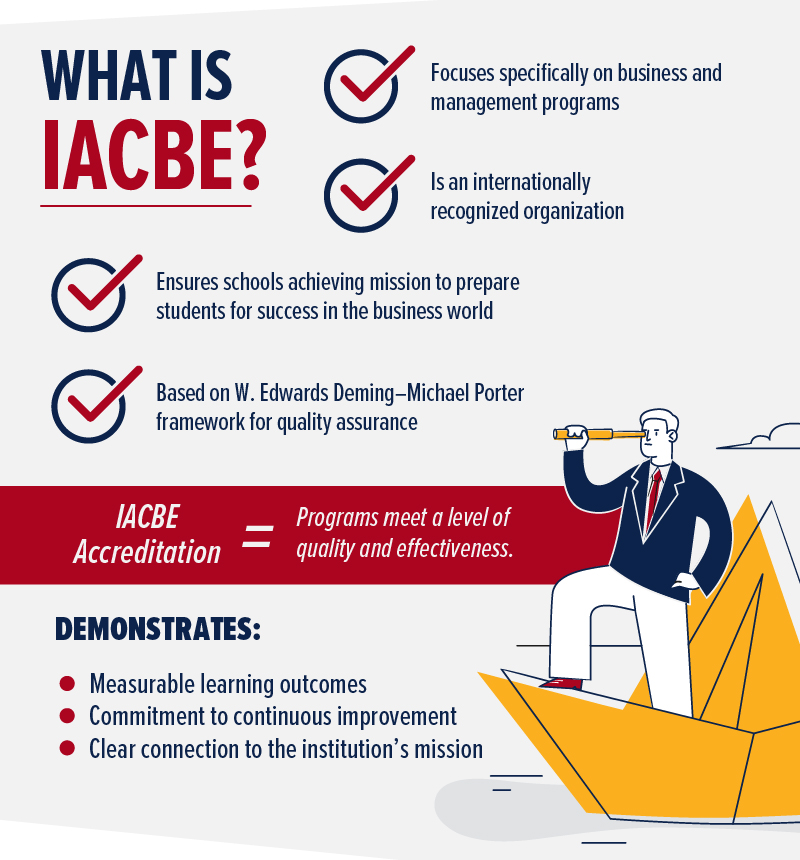
Unlike organizations that accredit entire colleges or universities, IACBE focuses specifically on business and management programs — from associate to doctoral levels. The goal is to ensure schools demonstrate they are truly achieving their missions and preparing students for success in the business world.
In short, IACBE looks at what students actually learn and accomplish, not just the resources or inputs an institution has in place.
Today, IACBE is an internationally recognized organization with members across the globe and is officially recognized by the Council for Higher Education Accreditation (CHEA) in the United States.
What Does IACBE Accreditation Mean?
Earning IACBE accreditation means a business school’s programs have undergone a thorough, independent review to verify their quality and effectiveness.
The IACBE accreditation process is based on the W. Edwards Deming–Michael Porter framework for quality assurance. This approach focuses on results — the “outputs” of education — rather than simply the “inputs” like facilities or faculty credentials.
In essence, IACBE accreditation recognizes programs that demonstrate measurable learning outcomes, a commitment to continuous improvement, and a clear connection to the institution’s mission.
What Is AACSB?
The Association to Advance Collegiate Schools of Business (AACSB) was founded in 1916 and is one of the oldest and most widely recognized accrediting bodies for business schools.
AACSB accredits entire business schools rather than individual programs and is well-known for its emphasis on faculty qualifications, research productivity, and academic rigor.
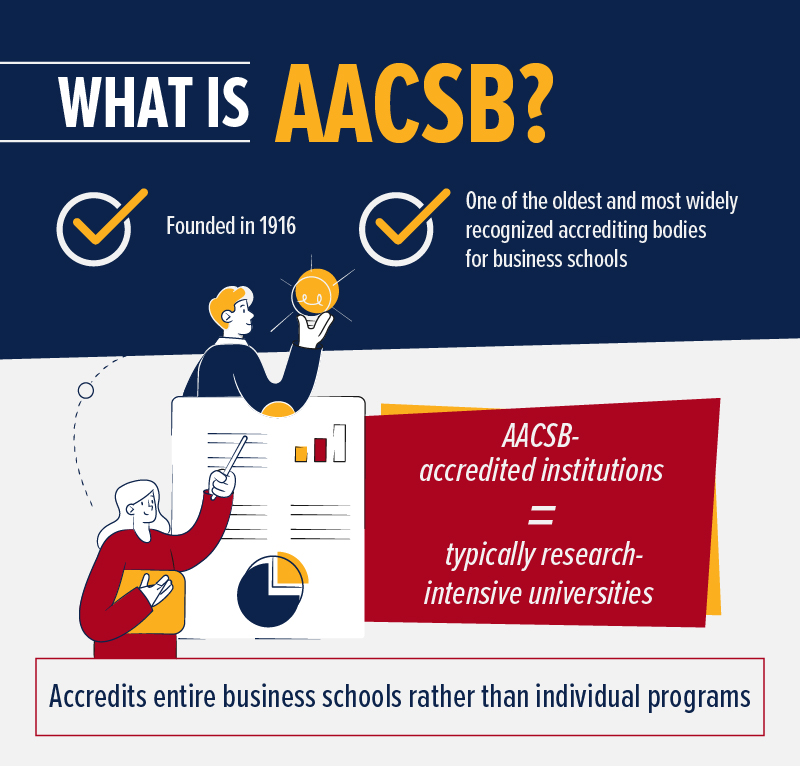
While both IACBE and AACSB are international organizations, AACSB-accredited institutions are typically research-intensive universities that place a strong emphasis on scholarly output and global academic standards.
IACBE vs. AACSB: Understanding the Differences
Although both IACBE and AACSB promote quality in business education, their philosophies and focus areas differ.
- Focus and Philosophy
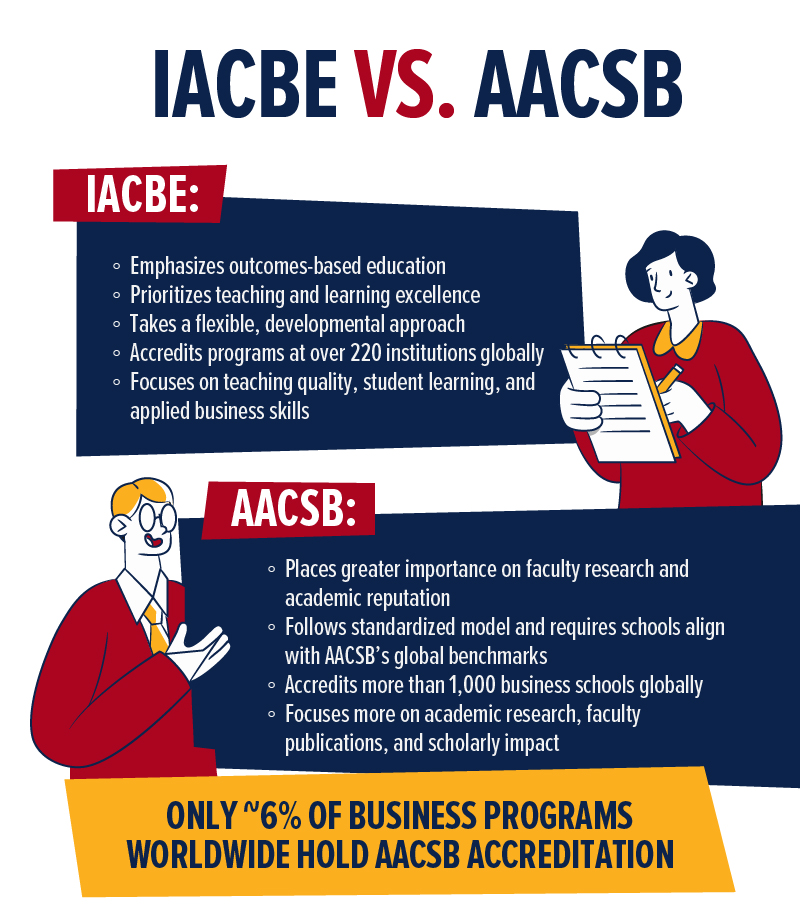
- IACBE emphasizes outcomes-based education, meaning it evaluates how well students are learning and how effectively programs achieve their stated mission. This approach resonates most with institutions that prioritize teaching and learning excellence.
- AACSB places greater importance on faculty research, academic reputation, and alignment with its global accreditation standards.
- Approach to Accreditation
- IACBE takes a flexible, developmental approach. Schools are assessed on their results and given opportunities to improve based on feedback from reviewers and commissioners.
- AACSB follows a standardized model, requiring schools to demonstrate consistency with AACSB’s global benchmarks for faculty qualifications, research, and performance.
- Scope and Reach
- IACBE currently accredits programs at over 220 institutions around the world.
- AACSB accredits more than 1,000 business schools globally.
- Educational Emphasis
- IACBE focuses on teaching quality, student learning, and applied business skills.
- AACSB focuses more on academic research, faculty publications, and scholarly impact.
Why Accreditation Matters
Accreditation serves as a seal of quality and credibility for both institutions and students. It demonstrates a business program meets rigorous standards and continuously strives for improvement.
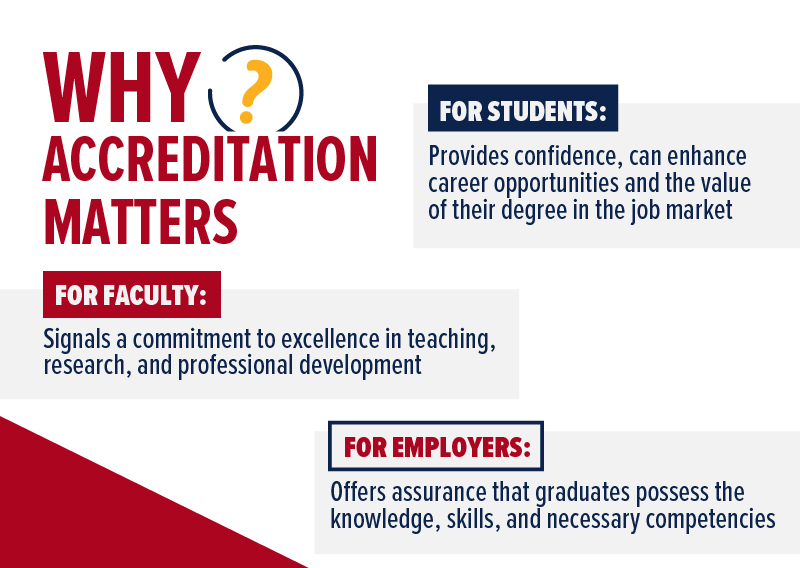
For students, attending an IACBE- or AACSB-accredited program provides confidence that their education meets high academic and professional standards. It can also enhance career opportunities and the value of their degree in the job market.
For faculty, accreditation signals a commitment to excellence in teaching, research, and professional development.
For employers, accreditation offers assurance that graduates possess the knowledge, skills, and competencies needed to succeed in today’s business environment.
In short, accreditation benefits everyone — it strengthens academic quality, supports student success, and enhances the reputation of the institution.
The Value of IACBE Accreditation
The IACBE approach to accreditation offers a distinctive value proposition for colleges and universities worldwide. By emphasizing outcomes-based evaluation and continuous quality improvement, IACBE promotes educational excellence tailored to each institution’s mission.
Here are some of the key strengths that make IACBE accreditation unique:
- Outcomes-Based Quality Assurance within a Deming–Porter framework
- Continuous Improvement Philosophy guided by the Deming Cycle
- Collaborative and Supportive Evaluation Process that encourages development
- Flexible Accreditation Model that adapts to diverse institutional goals
Together, these elements make IACBE a global leader in performance- and results-based accreditation. Its focus on student learning, institutional effectiveness, and mission-driven excellence ensures that accredited programs prepare graduates to thrive in a dynamic and ever-changing business world.
IACBE Accreditation and UAGC
The University of Arizona Global Campus has received specialized accreditation for its business programs through the International Accreditation Council for Business Education (IACBE) located at 11960 Quivira Road, Suite 300, Overland, Kansas 66213, USA. A broad spectrum of business programs offered by the College of Professional Advancement at UAGC are accredited by IACBE, including undergraduate, graduate, and specialized accounting programs. Accreditation remains valid through December 31, 2031, ensuring continued recognition of the university’s high standards of quality and performance.
The accounting programs in the following degrees are accredited by the IACBE:
- Master of Accountancy
- Bachelor of Arts in Accounting
Conclusion
Whether a business school seeks IACBE or AACSB accreditation depends on its mission and priorities. IACBE aligns best with institutions focused on teaching excellence, student learning, and practical outcomes, while AACSB often fits those with a research-intensive and global academic orientation.
At the end of the day, accreditation — no matter the pathway — reflects a school’s dedication to quality, accountability, and continuous improvement. For students, it means confidence in the value of their education and assurance that their degree represents true academic and professional excellence.
View the Full Infographic Below