Key Takeaways
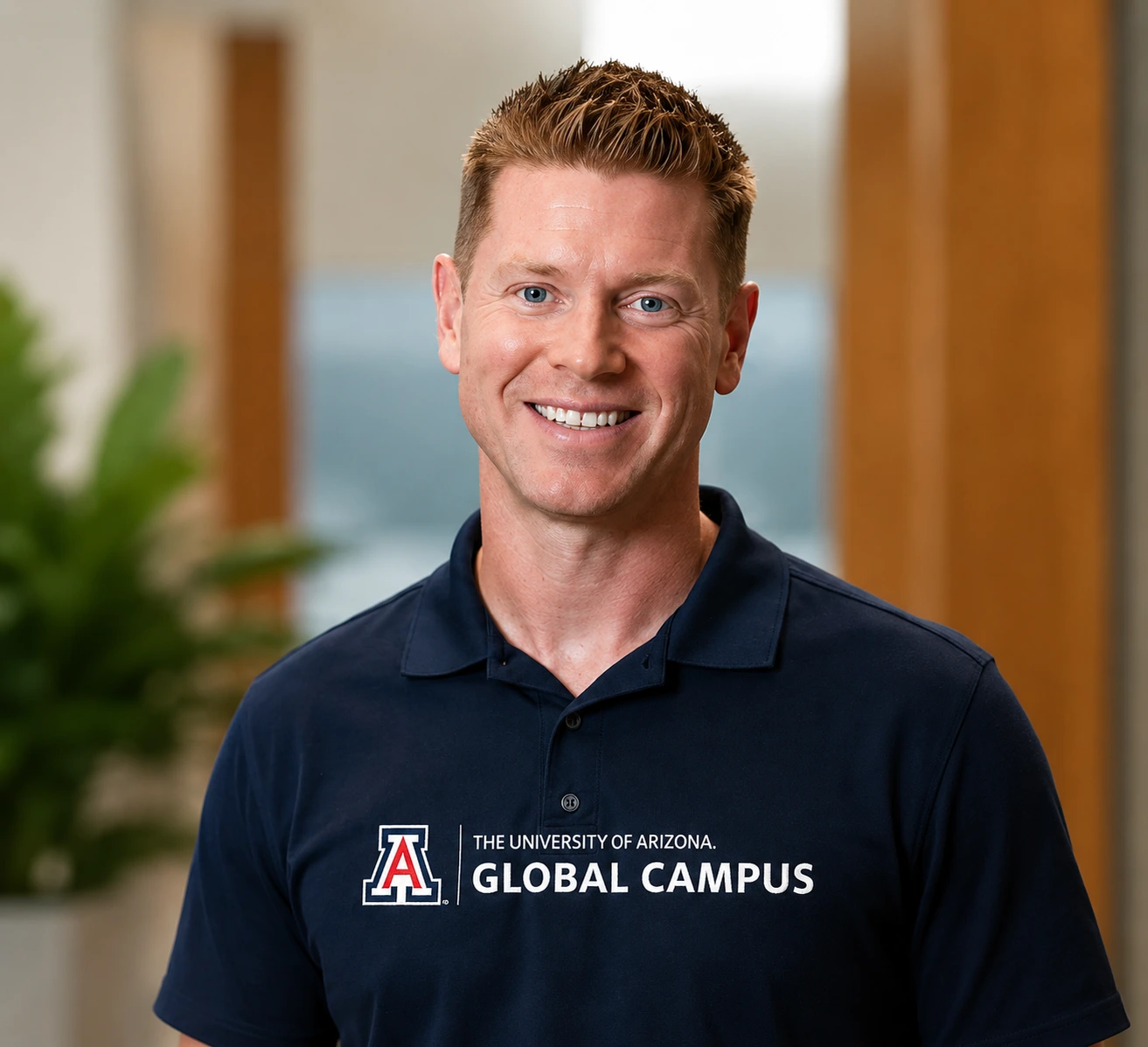
- This faculty spotlight features Dr. Todd Fiore, a doctoral professor and program chair at the University of Arizona Global Campus (UAGC). He supports the Doctor of Professional Studies in Organizational Leadership program and has served since 2011.
- Dr. Fiore brings extensive professional experience to his work in doctoral education, with a background spanning hospitality, retail, finance, corporate training, and higher education. He also co-owned and operated a restaurant and banquet facility for nearly 20 years.
- Dr. Fiore views doctoral education as a shift in mindset, not just another credential. His own experience as an online doctoral student gave him firsthand insight into the flexibility, challenges, and isolation that can accompany online doctoral study.
- His doctoral research has reinforced the importance of community. His dissertation examined persistence among online doctoral students and highlighted the role of peer support and building a doctoral community.
- Dr. Fiore encourages students to adopt a researcher mindset: rather than trying to prove what they already believe, they should set aside assumptions, consider multiple perspectives, and follow the evidence wherever it leads.
- His broader message to students: earning a degree is an accomplishment, but it isn't the end of learning. As knowledge and workplaces continue to change, the ability to keep learning becomes an enduring professional skill.
--
How Dr. Todd Fiore Turned a Lifetime of Learning into Leadership
What does working in a family restaurant have to do with becoming a doctoral professor?
For Dr. Todd Fiore, more than you might think.
Long before he entered a doctoral program as a student, Dr. Fiore was learning lessons about people, leadership, adaptability, and perspective. He started working in his family’s restaurant and sports bar at age 13, eventually taking on nearly every role in the business. His career would later take him through hospitality, retail, finance, corporate training, and higher education roles before leading him to doctoral study and, ultimately, leading a classroom.
Looking back, Dr. Fiore doesn’t see those experiences as disconnected chapters. He sees them as a collection of perspectives, each one adding something to the next.
“You could have 30 different answers to a question, and they're all correct, so you have to appreciate that in the doctoral space,” he says. “Working in all these different industries, it brings a number of different perspectives on the problem.”
That belief now shapes his work as a doctoral professor and program chair at the University of Arizona Global Campus (UAGC). For Dr. Fiore, learning doesn’t become irrelevant because you’ve moved on to something new. You learn how to compile and carry it forward.
“Be open to possibilities,” he says. “Rarely, if ever, are we certain of outcomes.”
The Restaurant Was His First Classroom
A fourth-generation restaurateur, Dr. Fiore grew up in a family where business was more than a profession; it was a way of life. His great-grandfather opened the second pizzeria in Chicago in 1919. His grandfather and father continued the tradition by opening restaurants of their own, and Dr. Fiore eventually co-owned a sports bar and banquet facility with his dad.
He learned the business from nearly every angle.
“I washed dishes, I cooked, I was a chef, I was a server, I was a busboy, I was a host, I managed the banquets and did marketing, so…you name it, I've done it in the restaurant business,” he explains. “Growing up, the restaurant business was where I thought I would always be.”
If you’ve watched Hulu’s “The Bear,” you’ve seen how a restaurant can become its own ecosystem; a place where communication, pressure, personalities, and split-second decisions collide. Dr. Fiore’s experience offered a similar education in one important respect: The work demanded that he understand people.
“One of the things I learned from that was the importance of meeting people where they're at,” he says. “When you work in a restaurant, you've got people from all walks of life that come in there, people from all walks of life that work for you.”
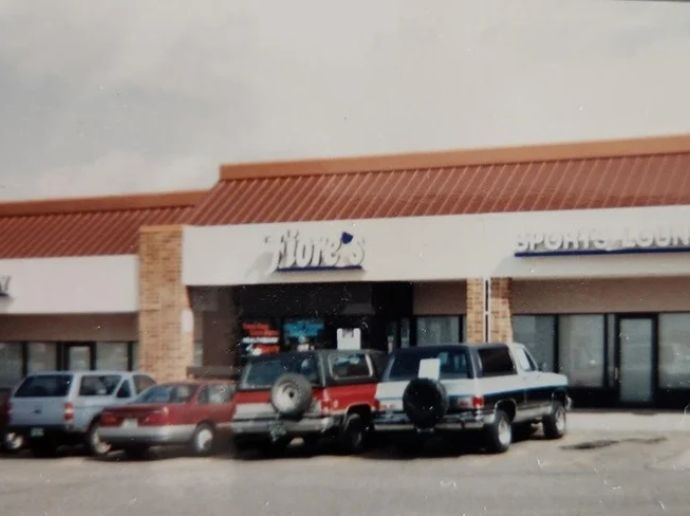
and started working in the business at age 13.
The lesson stayed with him.
“The flexibility and adaptability, it has helped inform the way I teach, in trying to meet students where they're at, and understanding their background, and their personality, and their heritage and … what they bring to the table,” he exclaims.
The restaurant taught Dr. Fiore to read a room, adapt his approach, and recognize that everyone brings a different set of experiences. Years later, those same skills would become part of his approach to doctoral education. But before that, Dr. Fiore wanted to see how those skills might translate beyond the family business. Working alongside his father, after all, didn’t always come easy.
“There are challenges working in a family business, as some might relate, and while my dad and I saw eye-to-eye 95% of the time, that other 5% of the time was difficult for both of us,” Dr. Fiore admits. “I also wanted to kind of step out on my own.”
Experience Becomes Perspective
Dr. Fiore earned an MBA while still working in the restaurant and eventually moved into the corporate world. However, leaving the family business didn’t mean leaving its lessons behind. Instead, Dr. Fiore began collecting new ones.
His professional experience stretched across large companies including Enterprise Rent-A-Car, Quest Communications, and the Schwab Food Company. Each environment exposed him to different people, organizational structures, and ways of solving problems and leading teams.
Then, in 2011, a job posting at a university caught his attention.
“I needed a change,” he explains. “I left my job with the Schwan Food Company, and I didn't know what I wanted to do. There was a job advertised with the university; I thought, I'll take this job for a while until I figure out something better.”
That temporary decision became another chapter in his education.
He joined the institution as an admissions counselor, later moving into student advising and learning and development. His corporate experience suddenly had a new application: helping people learn, navigate challenges, and develop their own skills.
For Dr. Fiore, education was becoming less about a single discipline and more about bringing together what he had learned across them. That perspective helped shape his decision to pursue a doctorate and eventually helped shape how he understood himself as a learner.
“Being the oldest of four and the oldest of 12 grandchildren, I always felt like I had a responsibility to set an example," he says. "My father had earned his bachelor’s degree, but I wanted to see how far I could take my own education. There was always this sense that I should keep pushing myself — not just for me, but for the people who were coming behind me. Earning a doctorate became part of that.”
Becoming an Independent Scholar
Dr. Fiore’s first experience with online learning came during his doctoral program. He quickly discovered the benefits.
“I can remember sitting in a classroom with my mind wandering a hundred different ways because I wasn't always engaged,” he says. “With an online program, I was able to complete the coursework when I knew I could be engaged, and I really appreciated that flexibility.”
His doctoral research brought another dimension to that experience. His dissertation examined the persistence of online doctoral students, giving him the opportunity to investigate a challenge he was simultaneously experiencing himself.
The research continues to inform his work with students.
“I refer students back to my dissertation all the time,” he shares. “Number one: If I can do it, you can do it. I've been right where you're at. But two, the information, the data that I collected and analyzed for my dissertation are relevant to where you're at right now and making that transition to an independent scholar.”
His research also revealed an important factor in online doctoral persistence: community.
“You might be the only person you know that's getting a doctorate,” he says. “You might be the first person in your family. Your spouse or significant other doesn't know what you're going through. They might support you, but they haven't done anything similar.”
Peer support, Dr. Fiore’s research found, can help fill that gap.
“It won’t just magically appear,” he explains. “You need to be intentional to build your own doctoral community to be successful.”
That finding also carries into Dr. Fiore’s work with doctoral students at UAGC.
“One of the things we're really emphasizing in the doctoral program is helping students develop their own doctoral community,” he says. “And that comes from the research that I did, plus other research that's been done about online doctoral student success.”
But perhaps the most lasting lesson of doctoral study was not about persistence. It was about how to think.
Follow the Evidence
Dr. Fiore says that research begins with a willingness to be wrong.
“When approaching research, you don't try to prove what you already know,” he says. “It's about going into it and being open to, well, ‘Let's see what we find out; Let's see what we can learn.’ And part of that is setting aside your own preconceptions and potential biases. And that's hard to do sometimes without practice.”
The challenge becomes especially relevant in an applied doctorate, where professionals are asked to investigate problems within organizations they already know intimately.
“We have our perspective inside the organization, so we look at a problem from our own perspective, but as a researcher, you have to consider all the perspectives,” he says.
A leader may enter a problem convinced they already understand what is wrong. Research asks them to pause, widen the lens, and allow evidence to guide their conclusions.
“When you have the researcher mindset,” Dr. Fiore explains, “you're open to wherever the data take you, as opposed to trying to find the solution that you're looking for.”
That mindset connects directly to Dr. Fiore’s larger philosophy about experience. Perspective is valuable, but it is not the same as certainty. The more willing you are to learn, he believes, the more you recognize that learning can come from anywhere, including the people you teach.
“I've learned more from serving as a dissertation chair for students than I ever could doing my own dissertation,” he says. “I could do 100 dissertations, but I'm always going to learn more guiding other students because they all bring their own unique ideas and approach, too.”
That exchange of ideas is part of what makes learning so meaningful for Dr. Fiore. Still, because doctoral study challenged him intellectually, earning the degree itself remains a deeply personal milestone.
“Completing my doctorate gave me the greatest sense of accomplishment I've ever had in my life,” Dr. Fiore proclaims.
Bringing Experience into the Classroom
Dr. Fiore has been with the institution for over 15 years, evolving from admissions and advising to corporate training, teaching, and doctoral program leadership.
He is also the first graduate of the university to become a program chair at the doctoral level, a milestone that gives particular meaning to his role helping shape the experience of future doctoral students.
However, a degree is an achievement, he explains — not the destination.
“Although doctoral education is a terminal degree, it doesn’t mean it’s the end of learning,” he notes. “Everything we know today could be different in 10 years. Your ability to keep learning is what keeps you valuable.”
Those sentiments are central to what he hopes students take with them beyond the program.
“I hope our students become leaders who can effect positive change within a versatile environment, who are open to different perspectives and understand that their way isn’t the only way,” he says. “They’re flexible, adaptable, and open to learning.”
What Will You Carry Forward?
From a family restaurant to corporate America, from online doctoral student to doctoral professor, Dr. Fiore’s career has given him a wide range of experiences to draw from.
But the value of those experiences wasn’t always obvious when he was living them.

for the Chicago Cubs and Denver Broncos.
“I never thought of becoming a doctoral professor,” Dr. Fiore says. “I had some vague ideas about maybe teaching at the high school level, but those were more associated with wanting to be a football coach when I was younger. What I’ve learned most is that you never know where you might end up, so the best strategy is to apply yourself fully to whatever you are doing now.”
That accumulation of knowledge is now part of what Dr. Fiore brings to his work as a doctoral educator — and what he hopes his students recognize in themselves.
“Try to stay open to possibilities as well,” he continues, “you never know what opportunities might present themselves. By doing so, you gain transferable skills that may not emerge until later. These skills give you confidence to bet on yourself to take advantage of the opportunities when they arise. Have the confidence to take a chance.”
The skills you’ve developed, the challenges you’ve navigated, and the perspectives you’ve gained along the way can all become part of what comes next.
Wondering where your experience could take you? Talk with a UAGC advisor to explore how your skills, knowledge, and lived experiences could shape your next chapter.