Key Takeaways:
- The Doctor of Professional Studies in Organizational Leadership at UAGC is designed for experienced professionals seeking to become scholar-practitioners.
- Dr. Todd Fiore shares how the program's Applied Doctoral Project focuses on creating practical solutions to real organizational challenges.
- Dr. Fiore introduces the iterative nature of doctoral writing and why feedback, revision, and attention to detail are essential parts of the learning process.
- Learn about the four "selves" of doctoral study: self-efficacy, self-direction, self-doubt, and self-care.
- Consider how to make intentional space for your doctoral studies while balancing your career, family, and other responsibilities.
- Dr. Fiore encourages all students to reflect on the motivation that brought you to the program and how it can help you stay committed throughout your doctoral journey.
Getting to Know the Doctoral Degree in Organizational Leadership: 6 Things to Expect as a UAGC Student
If there’s one thing you can expect from the University of Arizona Global Campus (UAGC), it is that we are anything but traditional. The Doctor of Professional Studies in Organizational Leadership is no exception.
As a student in the doctoral program, you are about to be part of something new and exciting – but also something that fits your personal and career goals. This program was intentionally designed with working professionals and the realities of today's workplace in mind.
I have been working with doctoral students since 2011, and their needs have evolved alongside the ever-changing workplace landscape. Having been an online doctoral student myself, I also know firsthand what it takes to succeed through such a program.
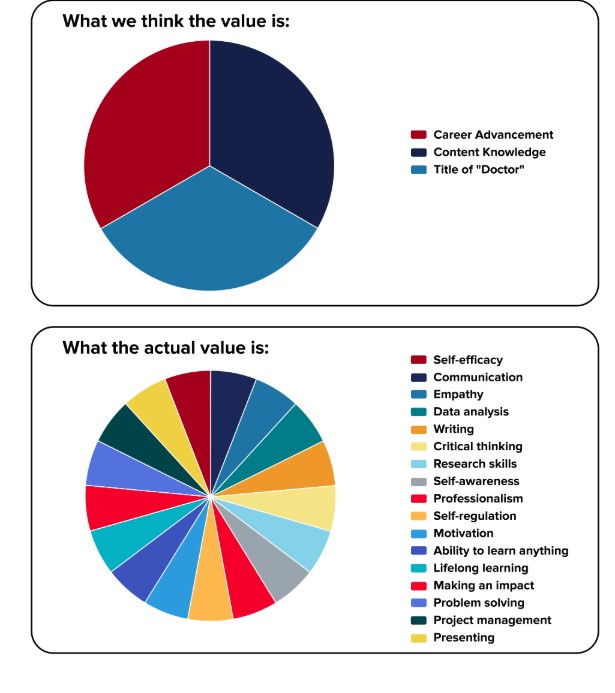
I am always excited to see the transformation that happens as students move through a doctoral program. You don't just gain knowledge and skills. You begin to think differently. You become more confident in your ability to analyze information, solve problems, ask better questions, and approach challenges from new perspectives.
Ultimately, you become recognized as an authority in your discipline. The instruction, assignments, and pace are all intentional in the Doctor of Professional Studies in Organizational Leadership and support this growth.
As you prepare to embark on this journey, there are six things I want you to know about what you can expect as a student in this program.
- Your Doctoral Work Will Have a Practical Purpose
When people think of a traditional doctoral program, they may think of a dissertation. A dissertation can range from approximately 100-200 pages and take many years to complete. It involves rigorous academic focus and time that some working adults juggling multiple responsibilities do not have. A dissertation can be an important contribution to scholarship, but the doctoral degree in organizational leadership at UAGC takes a different approach.
Instead of a traditional dissertation, you will complete an Applied Doctoral Project (ADP). While just as rigorous and grounded in academic theory and research, the ADP is designed with a practical outcome in mind. Rather than producing research that sits on a shelf, you'll propose a solution for existing problems you may face.
Doc700 introductory course to the program.
That solution might be a new training program, a revised policy, or another practical initiative that addresses a real challenge in your field. Whatever form it takes, your project will be built on original data that you collect and analyze to support your conclusions.
The Applied Doctoral Project is about solving a problem of practice — creating something your organization can put into action. As you begin your coursework, you don't need to know exactly what your ADP will look like. You have time to nurture that idea. Content courses will help you build knowledge, and research-based courses will give you the skills needed to complete your project.
- Be Prepared for the Iterative Nature of Doctoral Writing
One thing students are sometimes surprised by is the iterative nature of doctoral writing.
In your bachelor’s degree or master’s degree program, you might have written an assignment, submitted it, received a grade, and moved on to the next one. Doctoral study is different. It's about continuous growth.
You may find yourself working on the same assignment or the same part of a project through multiple drafts. You might have 10 or 15 versions of something as you work through feedback and continue refining it.
As you move through the courses, you'll receive feedback, apply it to your work, and then look for ways to make that work stronger. You may revisit the same ideas several times, and that's intentional. The goal isn't simply to complete an assignment or earn a grade. It's to grow your ability to think critically, communicate effectively, conduct research, and produce work that you're proud of.
That means attention to detail is important at a different level than you may have experienced in previous academic programs. Learning to embrace that process and understanding that a draft is an opportunity to improve rather than a finished product is an important part of becoming a doctoral scholar.
- Your Specialization Will Help Shape Your Perspective
Leadership looks different across industries. That's why the UAGC Doctor of Professional Studies in Organizational Leadership program offers four specializations:
- Education Innovation Leadership
- Human Services Leadership
- Organizational Effectiveness
- Performance Psychology Leadership
While each specialization focuses on a different area, they all share the same goal: helping professionals like you strengthen your ability to lead and create meaningful change within your teams.
Your specialization will allow you to explore concepts and issues that are relevant to your professional interests. At the same time, don't feel like you need to have everything figured out on day one.
Your professional goals may evolve as you move through the program. The more you learn, the more you may begin to see opportunities — or problems — in your organization differently. That's part of the process.
It's also important to note that these specializations are not designed to meet the educational requirements for a specific professional license or certification in any state, such as licensure as a psychologist or social worker. Instead, they are intended to strengthen organizational leadership within each area of focus.
- You Will Develop Your Four “Selves”
At the end of the program, a degree won’t be the only thing you leave with. You will take with you a new set of skills you can apply directly to your current role, your workplace, or your next opportunity. You will leave with a stronger professional toolbox, a sharper vision, and a more discerning stride.
I think about this in terms of four selves.
The four selves of doctoral study are:
- Self-efficacy
- Self-direction
- Self-doubt
- Self-care
Let’s take a closer look at what each means.
- Self-efficacy: The more you accomplish, the more confidence you build in your ability to take on new challenges. Throughout this program, you will harness core competencies, tackle complex problems, and strengthen your belief that you can make meaningful contributions within your place of work.
Each time you do something you weren't sure you could do, you're reaffirming that you can take on the next challenge.
- Self-directed: This is a self-directed program, but that does not mean you are alone. You will have support from faculty, advisors, academic resources, writing support, library services, and many others throughout your journey.
At the same time, part of becoming a doctoral scholar is learning how to identify the resources you need and take the initiative to use them. We will point you in the right direction, but your success will depend on your willingness to seek out and engage with those resources.
- Self-doubt: Let's talk about this one honestly. It's perfectly normal to feel a little imposter syndrome when you start. Many students ask themselves, "Is this for me? Am I prepared for this?" The answer is yes!
Those feelings are part of the journey. Through the aptitude, knowledge, and confidence you refine in the program, you will learn to move past that uncertainty and recognize that you belong.
Many students reach a point where they realize, "This is what I have been preparing for." They discover that their previous experiences, accomplishments, and determination have prepared them for this next step. Rest assured, you will discover this about yourself, too.
- Self-care: Finally, don't underestimate the importance of taking care of yourself. A doctoral program is a significant commitment. It takes time, focus, and intentional effort to balance your studies with your career, family, and other responsibilities.
Successful professionals are often the people others turn to for help. During this program, you may need to practice saying no sometimes and making space for yourself. Taking care of your mental, physical, and personal well-being is a part of this program and will help you show up fully for the challenges ahead.
By the time you begin your Applied Doctoral Project, you will have the foundation needed to create something meaningful, something you can be proud to bring back to your office. Your only job now is to stay curious, ask questions, use the resources available to you, and keep moving forward.
You will need to make room for the work
One of the questions students often ask is how much time they should expect to dedicate to their studies. The honest answer is that it will be different for everyone.
For many students, the commitment will be similar to a part-time job. This isn't a side hustle that you do whenever you happen to have extra time. You'll need to plan for it. You'll need to set aside dedicated time for your studies and make room for schoolwork in your life.
This is where I ask you to consider your motivations for earning this degree.
There are external motivations. In some organizations, a higher degree may create new opportunities or professional recognition. Those are valid reasons to pursue a doctorate.
However, many students find that their strongest motivation comes from within. Maybe you are a first-generation college or graduate student, like me, who wants to continue breaking barriers. Maybe you want to set an example for your children. Maybe you have always wanted to challenge yourself and see what you are capable of achieving.
Whatever your motivation may be, take time to understand why this goal matters to you. While this program is designed to provide flexibility for working professionals, it is still a doctoral program. It will require you to make intentional space for your studies.
Like any meaningful challenge, earning a doctorate takes commitment. But for those who are ready to make that commitment, it can become one of the most rewarding experiences of their professional journey. You’ve already made the decision to pursue the degree. Now, you need to stick to your commitment and keep your goal and your “why” in mind.
You can come as you are
You have the benefit of the experiences of those who have come before you, and at the same time, you're helping establish the experience for the students who will come after you. You are part of a doctoral legacy. That is something worth recognizing.
You bring your own professional experiences, questions, perspectives, and goals to this cohort. I hope you will be willing to share them, learn from one another, ask difficult questions, and take advantage of the opportunity in front of you. This is part of developing a doctoral community that will be a fundamental part of your success in the program.
You don't need to have everything figured out before the program begins. You just need to be willing to learn, to challenge yourself, to utilize the resources that are available to you, and to keep moving forward. And UAGC faculty and staff will support you from start to finish.
Getting Ready for the Doctoral Degree in Organizational Leadership
This is an exciting time in your academic journey, and I am thrilled to embark on it with you.
If you are not yet enrolled in the Doctor of Professional Studies in Organizational Leadership, but this blog piques your interest, learn more about the program and explore start dates today.
You may have questions about the program, your ability to balance doctoral study with your other responsibilities, or whether now is the right time to take this next step. Those are all reasonable questions to ask.
If you’re exploring that next step, speak to our admission specialists who are here to help. You don’t have to have all the answers before you start. You just have to be willing to ask the questions.