Become an Advocate for Your Community

Prepare for Work in the Criminal Justice System

Get equipped with the knowledge to help keep your community safe. When you earn your Bachelor of Arts in Social and Criminal Justice degree online from the University of Arizona Global Campus, you’ll gain a broad-based approach to working with law enforcement and the criminal justice system. Examine topics in criminal investigations, psychology, crime prevention, terrorism, the correctional system, and law.

You’ll investigate both the social and legal sides of working in the criminal justice field, and you’ll develop an additional understanding of the criminal justice system and the impact social issues have on maintaining a just society.

Upon completion of your bachelor’s degree in criminal justice, you will be able to:

  • Analyze criminal justice issues within the systems of law enforcement, the judiciary, and corrections
  • Evaluate the application of the social justice principles of equality, solidarity, and human rights toward building a just society
  • Apply knowledge of cultural sensitivity and diversity awareness to social and criminal justice
  • Deconstruct the relationship between law enforcement, the judiciary, and corrections
  • Interpret the relationship between social justice and criminal justice
  • Develop critical perspectives in the study of social and criminal justice by drawing on the fields of criminology, law, philosophy, psychology, science, and sociology

Why Choose the University of Arizona Global Campus?

Accelerated 5 week courses
1 course at a time
$0 Application Fee
Accredited by WSCUC

Military Students $250.00/credit

Undergraduate Courses $460.00/credit

Technology Fee** $115.00/course

Books and Other Class Materials** $125.00/average per course

Graduation Fee $150.00

Total Program Cost See UAGC Catalog¹


¹Keep in mind that this figure doesn’t factor in any potential discounts, partner benefits, or impact of accepted transfer credits, if eligible. 
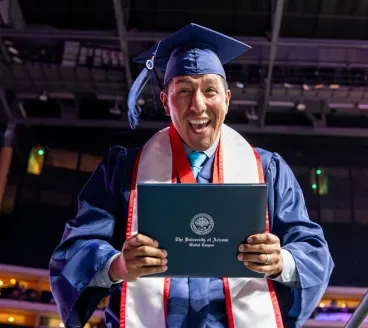
Smiling Graduating Student
Scholarships

Explore external scholarship opportunities that may help reduce the cost of your education. Review available resources and determine which scholarships may be a good fit for you.

Learn More

Partnership Savings

UAGC is proud to provide reduced tuition rates for our academic and corporate partners, helping community college transfer students and corporate employees earn their degrees at a lower cost.

Learn More

Careers Related to Bachelor of Arts in Social and Criminal Justice

Visit Career Services
Lady outside courthouse Lady outside courthouse

U.S. Department of Labor data regarding salary ranges and job growth projections are national in nature and do not guarantee employment, any specific salary, or job growth. Also, national long-term projections may not reflect local and/or short-term economic or job conditions. Top Skills are provided via Lightcast job postings data and may not align with UAGC program learning outcomes. UAGC programs are not designed to meet the state educational requirements for a specific professional license or certification in any state. UAGC does not guarantee employment placement, any specific salary from employment, or career advancement.

Course Overview

1

Freshman Year

  • In this foundational course, students explore the principles necessary for achieving personal and career success. GEN 101 serves as a road map, guiding students as they begin their academic journey. Through self-discovery, surveying available resources, connecting with UAGC groups, and engaging with Career Services, students learn the essential skills of planning and goal setting. Students apply their personal strengths, skills, and lifelong learning strategies to develop essential career competencies. By making these meaningful connections students gain a deeper understanding of how their education relates to their desired career path.  Congratulations on embarking on this college journey filled with growth, exploration, and endless possibilities! This course is not available for non-degree seeking students.

  • This course offers an overview of digital fluency as it applies to personal, academic, financial, and professional success. Students will analyze the impact of digital technology on personal, social, and diversity issues and will develop digital skills that will assist in achieving academic, personal, and career goals. An overview of digital media is introduced with practical strategies for application in personal and professional life.

  • ENG 121 is designed to introduce students to the standards of writing in both academic and professional settings. The class will operate by first introducing, and then allowing students to practice, several written communication skills. Throughout, we will work to understand writing as a process, one that is strengthened through critical thinking, deepened by research, and built on a foundation of professional standards. As part of this process, students will also consider how emerging technologies influence contemporary writing environments and the ways writers make informed, ethical choices about their use. Students will articulate a sense of their own skills and goals and engage in collaborative conversations with peers and their instructor so as to be able to express their ideas more effectively. During the course, students will use the writing process to scrutinize their own perspectives while challenging them to embrace a wider conversation.

  • Learn and use key, practical skills that are applicable at home, at work, and in all UAGC courses! As UAGC students progress in their academic journey, strategies for personal, professional, and academic success continue to develop. This introductory course takes a two-pronged approach to setting students on a path to success. It merges fundamental informational literacy concepts with essential resources and skills that prepare students for college and career. Students learn how to identify, locate, evaluate, apply, and acknowledge information obtained through UAGC Library databases and internet search engines. By applying the research process, students sharpen critical thinking skills and learn to use information ethically. The final project is a practical and relevant opportunity for students to apply their learning in personally, professionally, and academically meaningful ways.

  • In this course, students will develop and expand their research and writing skills to communicate ideas in informed, ethical, and persuasive written documents intended for a range of audiences across a range of situations and contexts. Students will receive instruction and practice in synthesis and analysis, bolstering their written communication skills with a thorough understanding of academic research while honing critical thinking skills and effective work habits. Through writing well-structured, logical, and effective academic essays, students will explore tools and develop topics in a way that is meaningful to academic and professional lives. Prerequisite: Successful completion of ENG 121 or equivalent with a grade of “C-” or better.

  • This course is designed to aid students in understanding the dynamics of interpersonal relationships. Verbal and nonverbal communication patterns among people in personal, social, academic, and professional settings will be examined, within and between cultures, including both face-to-face and technologically mediated channels.  The nature of these interactions will be evaluated using contemporary communication theory. The course will enable students to identify their interpersonal communication skills and behaviors and to more critically evaluate their own oral communication and that of others. The primary goals of the course are to improve the quality of students’ communication in their personal and professional relationships, to enhance students’ experience and. confidence with oral communication, and increase awareness of the importance of interpersonal communication that is inclusive and equitable.

  • This course is a study of correct and incorrect reasoning involved in everyday activities. The fundamentals of language and argument, deductive and inductive reasoning and other aspects of practical reasoning are examined. 

  • In this course, students will explore how human beings create meaning through story, symbol, identity, and culture. The humanities offer powerful ways of knowing that illuminate the complexities of personal and professional life. Through modular, interdisciplinary approaches, learners will engage with timeless questions—about self, community, power, justice, and the future—while connecting them directly to their own field of study. Each week, students will choose a learning pathway tailored to a chosen major (Business Leadership, Criminal Justice, Education, Healthcare, Information Technology, Liberal Arts, or Social and Behavioral Sciences). This flexible design ensures that the course both deepens one’s perspective and stacks meaningfully with the learner’s broader academic and career goals. By the end, students will have described, analyzed, applied, synthesized, and created work that demonstrates how humanistic approaches enrich professional knowledge and practice.

  • This course introduces students to the interdisciplinary field of social sciences and some of the disciplines that comprise this field, including anthropology, psychology, economics, sociology, political science, and history. In this course, students will learn important social science concepts and theoretical approaches, along with the research methods that social scientists use to study human behavior. They will also learn how research and findings from the social sciences can be applied broadly throughout society. Throughout the course and through a summative assignment, students will examine how social factors shape social behavior and some of the consequences of current social problems.

  • This course serves as a general survey of U.S. government and political institutions within social, historical, and contemporary context. Students will discuss the basic principles of constitutional democracy within the United States with regard to founding documents, political institutions, the separation of powers, federalism, civil liberties, civil rights, and political participation. Students will also evaluate how the history of the United States shapes contemporary U.S. society and political debates.

2

Sophomore Year

  • This course explores the complex relationship between human societies and natural systems. Students will learn about ecology, natural resources, climate change, energy, sustainable technologies, and environmental justice while investigating sustainable challenges and solutions through an interdisciplinary lens.  Students will research and propose solutions to environmental challenges at both a local and global scale with a focus on applications across multiple economic sectors, careers, and geographic regions.

  • In this course, students will explore a wide range of Algebra topics. Topics will include study of linear equations, linear relationships, slope, polynomials, and functions, including graphing relations and solving systems of equations. Emphasis will be placed on developing an awareness of historical and current uses of algebra in real life settings, in various careers, and in solving important societal problems.

  • This course examines and evaluates theories and arguments concerning ethics and moral reasoning from a philosophical perspective. By engaging with historical and contemporary sources, students will analyze theories about the meaning, nature, and justification of ethical concepts; determine and assess how different forms of moral reasoning apply to contemporary moral issues; become more reflective and informed about their own moral beliefs; and develop their capacity for critical practical reasoning.

  • This course introduces students to constitutional rights and issues as they apply to law enforcement at the federal, state, and local levels. Areas of study include federal court interpretations of constitutional provisions and amendments that apply to justice system processes. The course provides a focus on the Bill of Rights, particularly the First, Fourth, Fifth, Sixth, Eighth, and 14th Amendments. This course includes a study of the roles of legal professionals and constitutional provisions that apply to law enforcement, social justice, juvenile justice, and homeland security issues. This course also includes analysis of federal case decisions related to cultural issues, juvenile justice, criminal justice, and civil law.

  • This course considers processes for law enforcement, the judiciary, corrections and juvenile justice. In addition, this course considers criminal justice issues, applications for criminology, and critical perspectives in the study of criminal justice.

  • This course considers the basic sociological theories and research findings concerning crime. The punishment and corrections process, organized crime, corporate crime, the police, the courts and the impact of crime on the victim are examined.

  • This course examines quantitative, qualitative, mixed methods and associated data interpretation within the context of research, policy and practice within the social sciences. This course also examines the relationship between research, policy and/or theory. Students will examine types of data, measurement scales, hypotheses, sampling, probability, and varied research designs for research in the social sciences and related disciplines.

  • Introduction to the Psychology of Criminal Behavior provides an overview of the intersection of psychology and the criminal justice system. The biopsychosocial factors that may influence criminal behavior are examined such as aggression, psychopathy, mental health disorders, and brain dysfunction. Finally, appropriate psychological interventions are evaluated to determine the best course of action for predicting and treating criminal behavior in both juveniles and adults.

  • This course explores strategies of crime prevention including programs designed to reduce opportunities to commit crime, programs to alleviate demoralizing community social and economic conditions that foster criminal behavior, programs to improve police/community cooperation, and programs to educate young people as to likely consequences of criminal behavior.

  • This course examines the juvenile justice system from a historical and philosophical perspective. This examination includes an exploration of the prevalent patterns of juvenile delinquency, relates these patterns to theories of child and adolescent development, and examines various theories pertaining to the causes of delinquent behavior among juveniles. In addition, this course surveys the roles of a variety of stakeholders in the juvenile justice system as well as the role of police, courts, and delinquency intervention programs in the administration of juvenile justice. Emphasis will be given to strategies of prevention and early intervention.

3

Junior Year

  • A survey of constitutional rights, police compliance to constitutional rights, and constitutional amendments that specifically apply to the individual. The course examines the application of these rights in the enforcement, investigation, and adjudication of specific crimes.

  • Forensic science applies scientific methodology to crime scene investigation and crime solving. This course analyzes techniques of crime scene investigation and the lawful gathering of evidence. Emphasis is placed upon the Federal Rules of Evidence, including the admissibility of physical evidence at trial, as well as the role of forensic science in the criminal justice system and the identification, collection, and preservation of physical evidence (chain of custody issues).

  • This course is an analysis of correctional procedures and institutions, especially jails, prisons, parole and probation. Other topics include subcultures, social justice, alternative sentencing, and rehabilitation.

  • Students will review all learning objectives achieved throughout previous coursework and develop a comprehensive, focused study of a modern criminal justice issue while applying solutions and predictions for future trends in criminal and social justice. Successful students will focus on the pragmatic application of principles and theories that guide criminal justice practice in the United States. 

  • Elective requirements vary by program. Review the Program Requirements section for details about elective credits and degree completion requirements. Elective courses may also provide opportunities to pursue an Emphasis that complements your major and supports your academic or career goals.

4

Senior Year

  • Elective requirements vary by program. Review the Program Requirements section for details about elective credits and degree completion requirements. Elective courses may also provide opportunities to pursue an Emphasis that complements your major and supports your academic or career goals.

Program Requirements
Credit Breakdowns
Global Campus Foundations
33*
Credits
Major Credit Requirements
36*
Credits
Electives
57
Credits
Total Credits
120
Credits

To earn your Bachelor of Arts in Social and Criminal Justice degree at the University of Arizona Global Campus, you must complete 120 credits. You will need to complete 30 upper-division credits, of which 18 credits must be from the major program. A total of 30 credits must be completed at the University of Arizona Global Campus to meet the residency requirement. You may be able to transfer approved credits from community colleges, other previous college coursework, or other life experiences such as military service or job training toward your degree.

 

*In this program, 6 credits from the major may also satisfy General Education requirements.
Licensure and Certification Terms and Conditions

This program is not designed to meet the state education requirements for a specific professional license or certification in any state nor is it designed to meet the state educational requirements for a specific professional license or certification in any state. Students seeking licensure or certification in a particular profession shall carefully research the requirements prior to enrollment and regularly review the requirements as they are subject to change. Requirements vary by state. The University of Arizona Global Campus does not guarantee that any professional organization will accept a graduate’s application to sit for any exam for the purpose of professional certification. Further, a criminal record may prevent an applicant from obtaining licensure, certification, or employment in their field of study.

This program is not designed to qualify a student for employment with a federal, state or local law enforcement agency. State and local police agencies may require training and certification specified by the individual state’s law enforcement board and may be provided post-hire at a police academy. Other federal, state, and local agencies as well as private entities may have individualized requirements. Students shall contact individual agencies and states’ law enforcement boards for additional information relating to these requirements.

Quality Matters Certification

The Online Teaching Support Certification recognizes programs that require all online faculty to undergo training in best practices for online course delivery, provide faculty with ongoing pedagogical support, encourage faculty professional development to increase their knowledge and skill in online teaching, emphasize instructor availability and feedback to learners, and collect and use feedback from learners to improve online teaching. Learn More
The Online Learner Support Certification recognizes programs that provide all the critical student and academic services needed for learner success and use learner feedback to continuously improve those services.
Air University Associate to Baccalaureate Cooperative (AU-ABC)

The Air University Associate to Baccalaureate Cooperative (AU-ABC) Air University Associate to Baccalaureate Cooperative (AU-ABC) is a partnership between the University of Arizona Global Campus and the Community College of the Air Force (CCAF). The BA in Social and Criminal Justice is part of this agreement. The agreement allows students who have earned an Associate in Applied Science degree from CCAF to transfer their credits toward this degree at UAGC, significantly reducing the time required to complete their degree. Eligible students will need no more than 60 additional credits to finish their BA in Social and Criminal Justice. An example of how credits may transfer under this agreement can be found here.
What Can I Do with a Degree in Social and Criminal Justice?

Career Paths

As a graduate with social and criminal justice degree, you may be eligible to pursue a variety of positions, including:

  • Police Officer
  • Deputy Sheriff
  • Law Enforcement Officer
  • Probation Officer
  • Parole Agent
Connect With Career Services
Career Fields

Apply the knowledge you've gained with your criminal justice degree toward a career in the criminal and social justice field. The U.S. criminal justice system faces unique and unprecedented challenges in the 21st century, and with this degree, you can be at the forefront of institutional change.

Connect With Career Services
Job Market Outlook

Gain insights into the criminal justice job market by reviewing the Bureau of Labor Statistics market outlook report.

View Full Market Outlook

I love UAGC because it’s online and I can be a mom, work, and still accomplish my educational goals.

Jeniva D.
UAGC student Jeniva Dapson
Class of 2023

Bachelor of Arts in Social and Criminal Justice FAQs

  • A bachelor’s degree in social and criminal justice can open up career paths to jobs in law enforcement, corrections, probation and parole, and police work.

  • Core courses commonly include criminology, criminal law, sociology, psychology, ethics, and research methods. Through your criminal justice degree classes at UAGC, you’ll investigate both the social and legal sides of working in the criminal justice system. By examining topics in forensics, psychology, crime prevention, terrorism, the correctional system, and law, you will develop the skills and gain the knowledge needed to build an effective career in criminal justice.

  • The UAGC online criminal justice program allows you to collaborate with classmates from diverse backgrounds in a flexible and collaborative online environment. Experience an online classroom that gives you the flexibility to create your own schedule, allowing you to complete your coursework more efficiently.

  • The increasing quality and accessibility of online education have significantly reduced the stigma associated with online degrees. According to U.S. News & World Report, many employers now recognize the value of online programs, particularly in fields like criminal justice where flexibility and continued education are often essential.

  • To be as successful as possible in your program, you’ll need basic computer skills, reliable internet access, and a compatible device (laptop or desktop computer). Details on technology requirements can be found in the UAGC Academic Catalog. As a UAGC student, you’ll have 24/7 support if you run into any technical difficulties.


Certain degree programs may not be available in all states.

**

The Technology Fee covers access to University systems such as the online classroom, myUAGC, and other academic resources. The Technology Fee and the Course Digital Materials (CDM) Fee are fully refundable if a student does not attend beyond Day 3 of a course (Week 3 if covered under the University of Arizona Global Campus Promise Refund Schedule). After this time, the fee becomes non-refundable. Students are charged the Technology Fee for repeated coursework. Students are not charged the CDM fee for repeated coursework if previously charged.

^

The transferability of credits is subject to the University of Arizona Global Campus (UAGC) transfer credit policies and requires the submission of official transcripts. The official transcripts will be evaluated by UAGC to determine the credits that will officially apply toward a UAGC degree program. Credits must be earned at the same degree level in order to be applied. Additional restrictions may apply. See the UAGC Academic Catalog for full undergraduate and graduate transfer policies.

Search UAGC

Let us help.

Fill out this form to talk with an advisor.

Are you currently a licensed RN?

This program requires you to be a current licensed registered nurse. Please check out other programs to reach your education goals such as the BA in Health and Wellness.

Are you a member of the military?

We are currently not accepting new enrollments in the state of North Carolina.