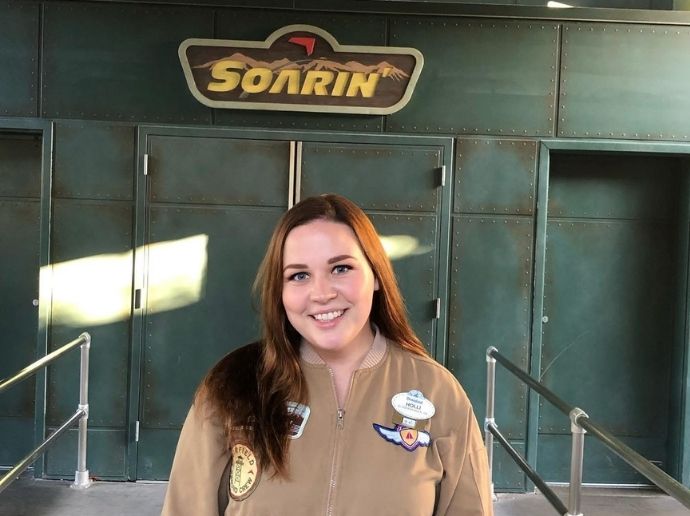
Before she was a lead financial service representative at the University of Arizona Global Campus (UAGC); before she was balancing undergraduate coursework for her Child Development degree at UAGC while raising a stepdaughter, two toddlers, and another baby on the way, and before she was a content creator, UAGC student Holli Stapleton wore a name tag and a smile at Disneyland California Adventure Park. The year was 2015.
For six years, Holli was “part of the cast.” In her role, she greeted families from around the world, operated attractions, and learned how to “make magic” for guests whose vacations didn’t always go as planned. Magic, in that context, wasn't a theatrical spectacle. It was an activation of empathy.
“If you’re talking to this family and they tell you their flight was delayed or it took them three extra days to get there, there’s so many things that can go wrong when you’re traveling. You could make magic for them — give them a Lightning Lane Pass or walk them to the front of a different ride.”
Sometimes magic meant reframing disappointment. When a ride was unexpectedly closed and a child wanted to know why, Holli had to think quickly.
“The ride is closed today because Mickey had to take his car to get an oil change,” she’d say, turning frustration into a story.
At the time, she didn’t know those years of improvisation, emotional intelligence, and creative problem-solving would follow her into nearly every role she would hold in the future. But looking back, there is a clear throughline in Holli’s story: a pattern of learning skills before she knows she will need them.
Perhaps above all, she possesses a willingness to be vulnerable enough to use them.
“It’s impossible to plan for every possible scenario life can throw at you," Holli says. "But I like to think that the best way to serve yourself and your loved ones is by being vulnerable, open, and always curious enough to learn.”
Learning the Language Before the Need
Long before she donned her figurative “Mickey Ears,” Holli attended community college in California, eventually earning an associate degree in liberal arts along with a certificate in American Sign Language. There was no family history of deafness on her side or her partner Skylar’s. No immediate reason to pursue ASL beyond an unexplainable personal interest.
Still, she felt compelled.
“This is going to sound weird,” she said, laughing softly. “But I always had the strangest feeling that I’d have a child who was deaf or would need sign language.”
So, she took every class she could.
Holli planned to use baby sign language someday with her children. When she became a mother to Irish twins — two babies born less than one year apart — she did exactly that. But what began as enrichment quickly became essential.
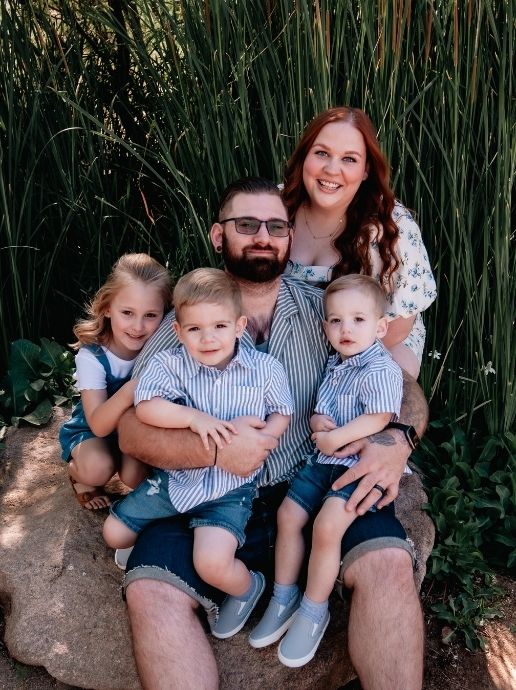
When her youngest son was 18 months old, a pediatric specialist sat across from Holli and Skylar and confirmed what she had known for months: autism spectrum disorder. At 9 months, she had already begun noticing the small differences — the way his brother babbled nonstop at that age, while he remained mostly quiet and secluded. The way certain sounds overwhelmed him. While other parents celebrated first phrases, Holli found herself studying typical stims or repetitive movements, tracking milestones, and watching closely.
Advocacy came before academia. Before enrolling in new classes at UAGC, before reshaping her career trajectory, she was simply a mother paying attention.
ASL has become a bridge for her son — a way to communicate his needs and feelings while navigating his speech delay. What once felt like an inexplicable pull to learn sign language now felt like preparation.
In these moments, vulnerability also entered her life in a new way: as the raw exposure of loving a child whose path would not look like the one she had imagined. Instead of retreating, she leaned in.
“I knew I was going to do everything I could to make sure my children led fulfilling lives.”
In February of 2025, Holli enrolled in the Bachelor of Arts in Child Development program at UAGC, taking advantage of her employee benefits and aligning her academic life with her lived experience.
“Pursuing my degree was completely based on making sure I was the best mother possible to my children,” she explains. “I want to show them that hard work and determination can get them through anything.”
When Coursework Meets Real Life
In her child development classes, theory and reality collide daily.
For example, the class she’s in now is focused on the five domains of development, including physical, motor skills, social-emotional, cognitive, and language.
"It’s impossible to plan for every possible scenario life can throw at you. But I like to think that the best way to serve yourself and your loved ones is by being vulnerable, open, and always curious enough to learn."
For many students, developmental milestones are abstractions in a textbook. For Holli, they are memories — some celebratory, others complicated.
“I wanted to be learning it as my kids were going through it,” she says. “If they ask a question about infants, I can say, ‘They did do that.’ Or, with my autistic son, ‘He didn’t do that on time.’ I’m able to bring a lot of my own personal story into my coursework, and it helps me.”
Her psychology course has been another standout.
“I’ve always loved learning how the brain works and how all things connect,” she said. “Being able to tie it into child development was very cool.”
What has surprised her most is not how much she is learning — but how much she already knew.
“Any mom knows there are a million things going through your head every day. So, when I’d hear something in class I’d already experienced with my own kids, it made the material feel more real, and it made it easier to keep going. If anything, it’s made me even more determined to finish.”
That determination is visible in the numbers. At UAGC, Holli maintains the highest GPA she has ever earned. To maintain this momentum, she studies during nap times, after bedtime, and in the margins of an already full life. She is tired. She is busy. She jokes that the first thing she plans to do after graduation is take a long, uninterrupted nap.
But beneath the humor is discipline — and purpose.
"Pursuing my degree was completely based on making sure I was the best mother possible to my children. I want to show them that hard work and determination can get them through anything."
Holli’s long-term goal is to become a Board-Certified Behavior Analyst, a professional who designs and oversees behavior intervention programs for individuals with autism and other developmental disabilities. The credential requires a master’s degree and extensive supervised experience. It is, by her own admission, a hard road, especially for any parent who has a child with a disability.
“If I could do that for another family — give them that peace of mind, help those parents through it, navigate it from their own situation, I would feel really good about doing that,” she says.
Creativity as Advocacy
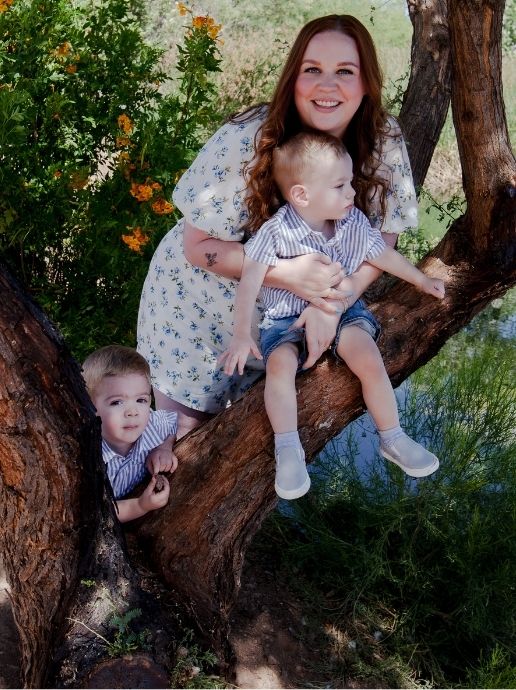
Holli’s empathy does not stop at the classroom or therapy appointments. It extends into the digital world.
She first began creating content in 2020, during the COVID-19 pandemic. With a background in theater — primarily technical work behind the scenes — she decided to step into the spotlight.
“During the pandemic, I decided to take center stage, if you will,” she said.
She started with dance trends and general lifestyle posts. Over time, her content evolved. When she noticed stronger engagement around pregnancy updates and early motherhood, she fully embraced motherhood content.
“Once my first son was born was when I really went all in,” she says.
Today, her platform includes “get ready with me” videos, weekend vlogs, updates about applied behavior analysis therapy, pregnancy updates, and glimpses into life as a work-from-home mom. She shares resets in her son’s sensory room on Tiktok. She talks openly about the realities of raising a child with autism while navigating a high-risk pregnancy and working full time while raising two other children.
The content is not polished perfection. It is her raw, unfiltered reality. And she hopes sharing her life in its truest form can help ithers who may feel alone or struggling.
“There’s always going to be a toddler mom, a mom with little boys or girls, and unfortunately, there’s always going to be another child with autism, so it’s all relatable,” she explains.
"This school is designed for people like us, people who are busy, who have multiple jobs, who have kids, and don’t exactly have the time."
In choosing to share, Holli participates in something larger than algorithm-driven engagement. She contributes to autism awareness by normalizing conversations about therapy, delays, sensory needs and parental grief alongside joy. She models what vulnerability can look like in a digital age often curated for comparison.
Her creative instincts — honed at Disneyland — are still present. She knows how to tell a story. She understands pacing, tone, and audience. But now, the magic is not about skipping a line for a ride. It is about helping another parent feel less alone at 2 a.m., scrolling through their phone after a difficult day.
Making Magic at UAGC
At work, Holli returns to the philosophy she learned as a Disneyland cast member: make people feel seen.
As a lead financial service representative, she often speaks with students who are overwhelmed — by tuition, by loan terms, by uncertainty about the future. As a student herself, she relied on financial aid while pursuing her associate degree and remembers the confusion clearly.
“I didn’t have the money to pay for school,” she says. “It’s so important to understand your financial aid — what you’re getting into when you take out a loan, what a Pell Grant is. All of it is important to fully understand before you do it.”
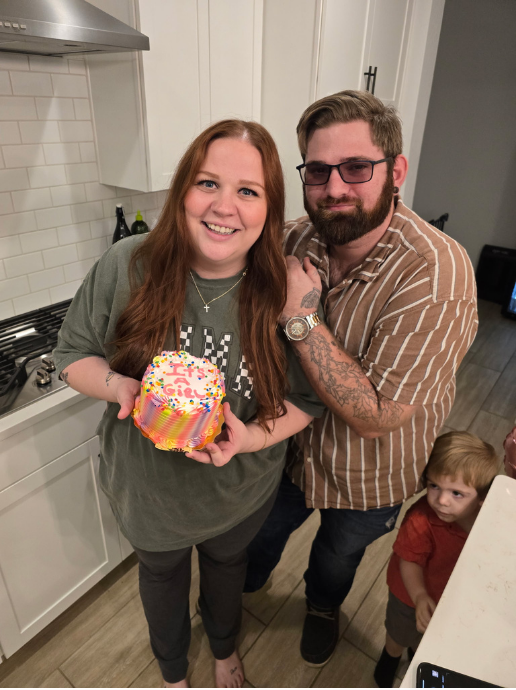
In those conversations, the same quick thinking and compassion she once used to explain a ride closure now helps demystify financial processes. The stakes are different, but the principle is the same.
She believes UAGC is built for unique people who lead unique lives. People who don’t fit into the traditional mold, people like her.
“This school is designed for people like us,” she says. “People who are busy, who have multiple jobs, who have kids, and don’t exactly have the time.”
Holli’s life is proof of that design. She moves between roles fluidly: employee, student, mother, advocate, creator. Her story is not one of effortless balance. It is one of deliberate effort. It is about learning a language before you know why, about trusting intuition, about studying developmental theory while living it hour by hour. It is about allowing others to witness the imperfect middle.
Holli Stapleton once made magic by escorting families to the front of a line. Now, she makes it by reminding them that even in the most challenging seasons as a UAGC student, anything is possible.
And in this case, that is the most powerful magic of all.
--
The Bachelor of Arts in Child Development at the University of Arizona Global Campus is not designed to meet the state educational requirements for licensure or certification in any state.